
Paper and Grain · FIELD NOTE 15
Wove Paper and the Smooth Surface of Industrial Change
Why does wove paper look different from laid paper?
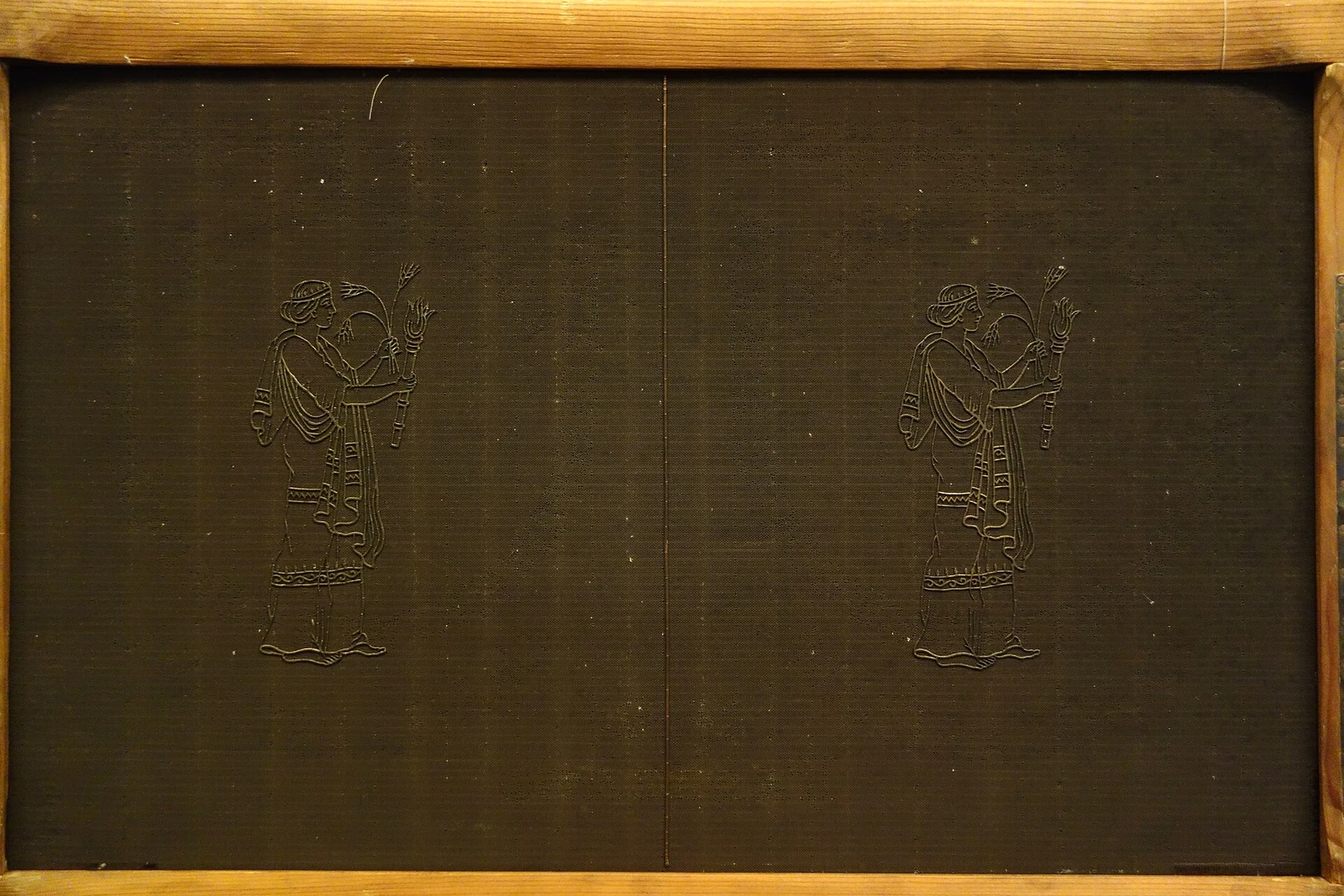
A sheet without prominent laid lines can appear visually quiet, but quietness is not the absence of manufacture. Wove paper records a different forming surface from laid paper, and the distinction belongs to the sheet's formation rather than to a simple smooth-versus-rough ranking. For readers of old books, the useful task is to describe that evidence without letting it become an unsupported date or quality judgment. For makers, it is to choose a surface that serves a particular printed or written page.
Woven screen, different evidence
CAMEO describes wove paper as formed on a woven screen of wire mesh or fabric. In transmitted light it lacks the characteristic laid-and-chain-line system, although a weave impression can sometimes be visible. Wove therefore does not mean perfectly featureless. Nor does the word mean that the paper itself is woven like cloth. The fibres form a sheet; the term points to the supporting screen and the evidence it leaves during formation. [1]
Laid paper offers a useful contrast because its more obvious crossing line rhythms can dominate an introductory comparison. In a new-stock sample exercise, place identified laid and wove papers beside each other under the same viewing conditions. Record what the supplier identifies and what you can see independently. The comparison is educational, not an attribution test for unidentified collection material. A sheet whose pattern is hard to see should remain uncertain rather than being forced into the quieter-looking category.
Surface finish is another variable
A textured wove sheet and a smooth laid sheet can upset a beginner's expectations. Formation and surface finish describe different aspects of paper. A finger's impression of smoothness cannot replace an examination of the sheet's internal pattern, and touching fragile media simply to compare texture creates unnecessary risk. Use catalogue information or approved images when handling limits prevent a direct view. What cannot be established visually should remain unestablished in the record.
The distinction also matters when ordering new stock. Wove describes a formation category, not a complete specification for printing, folding, or drawing. Ask about weight, sizing, grain, surface, and intended use separately. A paper that produces a pleasing print sample may still be unsuitable for the chosen book format. Keeping these properties in separate columns prevents a familiar word on a packet from becoming an all-purpose promise about the finished object.
A material clue cannot date the whole book
A book's text, endpapers, inserts, and repairs may not share one paper or one moment of manufacture. If an endleaf is wove while the text appears laid, that contrast is worth recording. It does not alone prove rebinding, forgery, or replacement. A responsible account asks how the components are attached and what the bibliographical record says. The physical distinction provides a question for further research rather than a verdict about authenticity.
The Library of Congress uses paper terminology within a guide to distinguishing noteworthy newspaper issues and reprints. That context shows why material observations are most useful alongside other bibliographical clues. A format, date line, type impression, or publication record can supply information that paper alone cannot. Do not transfer a definition from the glossary into a universal rule that a particular formation identifies an original or a reproduction in every case. [2]
Separate manufacturing change from inevitability
Industrial production changed the scale and consistency of paper supply, but a visible formation category does not tell you every step used to produce a particular sheet. A short description should not equate wove with machine-made and laid with handmade as an exhaustive classification. The question of process needs evidence specific to the material. This keeps a broad story about production change from overruling what an individual book can actually demonstrate.
Imagine a hypothetical edition containing a smooth text stock and a textured illustration stock. Their difference could serve the printing needs of the two components rather than indicate a defect. Conversely, papers that look alike may have different compositions. Comparing the functions of the components produces a more useful account than praising uniformity. A book is often an assembly of purposeful contrasts, and its paper description should be able to accommodate them.
Choose for the page you intend to make
For a new booklet, prepare a proof with actual text size, line weight, and image detail. Keep the chosen printing or drawing method constant while comparing candidate papers. Label the samples before the test and evaluate them after normal drying. This proposed workflow assesses suitability, not historical identification. Record the result in terms of the task: readable fine lines, acceptable show-through, comfortable folding, or an unresolved problem near the intended spine.
For an old volume, substitute observation for testing. Record the component, lighting method, visible pattern, and any reliable catalogue identification. Do not make a rubbing, wet a corner, or cut a sliver to prove a category. If paper formation matters to a research argument, ask for an appropriate examination rather than sacrificing part of the evidence. A clear uncertain observation is more valuable than an irreversible demonstration of a weakly supported guess.
Wove paper offers a lesson in descriptive precision. Its screen pattern differs from laid paper, but its appearance does not settle composition, manufacture, permanence, or date. Keep those questions separate and the apparently plain sheet becomes more informative. The reader gains a reliable material description; the maker gains a better selection process. Both benefit from treating formation as one useful property instead of a shortcut to the entire history of the book.
Sources
References below support the factual explanations in this article. Read each source within its stated scope and context.