
Tool Bench · FIELD NOTE 22
Adhesives in Book Work: Reversibility Starts With Restraint
Why are household glues risky on books?
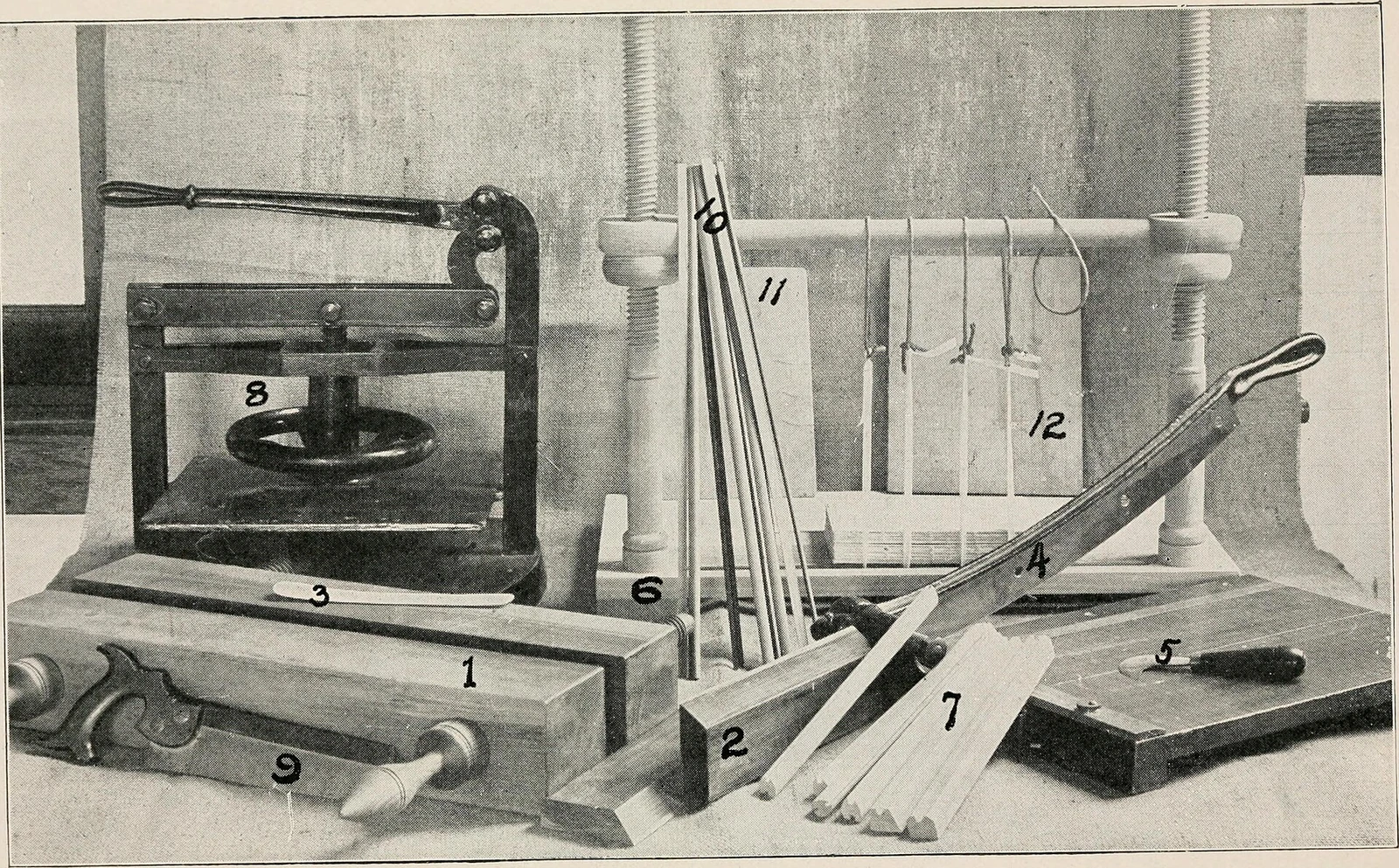
The first question about an adhesive should be what connection it must make, not how strongly it sticks. A new case, a paper hinge, and a repair beside historic writing are different tasks. They involve different materials, future access needs, and consequences if removal becomes necessary. An adhesive can perform convincingly at first and still be unsuitable for the object. Choosing responsibly means considering the bond, the moisture or solvent introduced, the aging materials, and the next person's ability to understand the work.
Reversible needs a question after it
Ask reversible under what conditions, by whom, and with what effect on the surrounding materials. A substance that can be softened with water is not automatically removable from a sheet carrying water-sensitive media. A flexible adhesive is not automatically appropriate beside a weakened fold. These are relationships rather than a single label on a bottle. The realistic aim is to preserve future options, acknowledging that treatment materials and the original object will continue to age together.
The Canadian Conservation Institute recommends wheat starch paste for certain paper applications and describes the qualities and preparation of a known paste. That is useful professional evidence, but it does not make any kitchen mixture equivalent or authorize pasting every loose fragment. The treatment still needs a suitable paper support, controlled application, and an understanding of the object. A recognized adhesive is one component of a method rather than a substitute for the method. [1]
Paste, PVA, and context
Dartmouth's manual distinguishes common repair adhesives, including starch paste, polyvinyl acetate, and methyl cellulose, and places them within an institutional workflow. It explicitly cautions about PVA where reversibility on rare material matters. Read that boundary together with its procedures. A circulating-book repair selected to extend useful service and the conservation of an important historic binding do not necessarily share the same acceptable changes, even when the visible damage initially looks similar. [2]
Abbreviations can also obscure product differences. Do not assume that every bottle described casually as PVA has an identical formulation or aging behavior. Keep the actual product identity, manufacturer information, and intended application in the work record. A supplier's broad craft description is not evidence for permanent contact with a valuable object. When information is missing, choose a different plan or seek advice rather than filling the gap with the reputation of a familiar three-letter name.
The wet stage belongs to the decision
An adhesive's dried film is only part of the process. Application can introduce moisture, cause temporary movement, or carry material into a location that is difficult to reach later. For a new model, consider where excess material could go before applying it. A bond line near the gutter may affect opening differently from the same adhesive spread over a flat board. The location and quantity are therefore part of the specification, not incidental details left to intuition.
Use expendable materials to rehearse the entire sequence, including alignment, working time, support, and drying. A small successful bond does not prove that a large covered board will remain aligned. If the operation cannot be completed while the material remains workable, reconsider the design or workflow. This is proposed workshop planning, not a claim that a particular formula or open time has been tested for the reader's materials.
A repair can hide the failure it addresses
When a cover is loose, fresh adhesive may conceal the exact place where the original connection separated. It can also join components that were intended to move independently. Before treatment, record the visible condition and determine whether the immediate need can be met with support or housing. An improved appearance after gluing is not sufficient evidence that the original mechanical relationship has been restored or that future examination remains straightforward.
The distinction is especially important around inscriptions, decorated endpapers, and evidence of earlier work. A tidy bond may cover a mark or trap a fragment in a new position. The appropriate repair question is therefore broader than whether the materials will adhere. It includes what information might be obscured, what handling is necessary, and whether an alternative can meet the access need while changing less of the object.
Record the connection, not just the product
A useful new-project record identifies materials joined, preparation, product, date, application area, and intended purpose. Explain which sample or method informed the choice without claiming laboratory testing that did not occur. If another person later needs to separate the parts, this record may be more valuable than a statement that archival glue was used. A marketing adjective cannot reconstruct a hidden bond line or the decisions behind it.
For a significant existing object, consult a conservator before adding adhesive. Bring photographs and a clear account of the intended use. The specialist may recommend treatment, a protective enclosure, restricted access, or another solution. Accepting a housing recommendation is not a failed repair; it may be the most proportionate way to meet the current need without committing the book to a poorly understood connection.
Restraint in adhesive work is practical planning. Define the connection, check the relevant materials, rehearse the full operation on a model, and preserve a record. Treat reversibility as a conditional property of a treatment within an object, not an absolute promise on a container. The result is a more accountable bond and a clearer explanation of what remains possible when today's solution eventually needs reconsideration.
Sources
References below support the factual explanations in this article. Read each source within its stated scope and context.