
Paper and Grain · FIELD NOTE 16
Marbled Paper: Pattern, Use, and Responsible Care
How should I look after marbled endpapers?
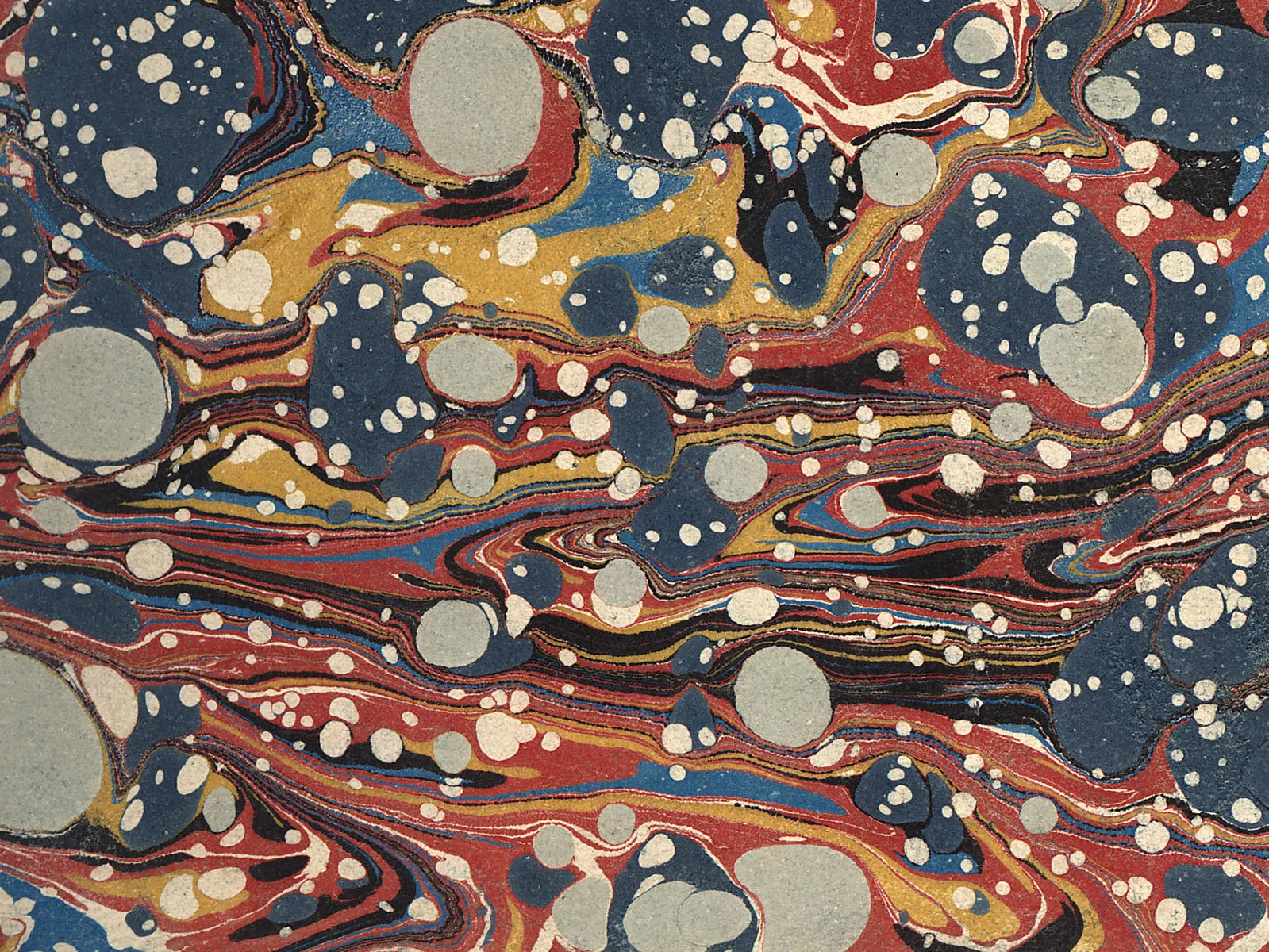
Marbled endpapers invite close looking because their patterns appear both deliberate and unpredictable. The colours may form combed rows, floating islands, or branching swirls, yet the sheet still has a practical place in a binding. Understanding the decoration and caring for the object require different questions. How was a pattern transferred? Where is the paper attached? What can its appearance actually establish? Keeping those questions separate allows appreciation without turning an attractive surface into a specimen for casual cleaning tests.
A floating pattern transferred to a sheet
The Metropolitan Museum describes marbling through colour arranged on a prepared bath and transferred to paper. Its account connects the flowing pattern with the marbler's manipulation and illustrates decorated book materials. This explains why the design can combine repeated rhythms with local variation. It does not identify the materials of every sheet that resembles those examples. A printed imitation and a differently made decorated paper can share an outward pattern without sharing the same process. [1]
Begin a description with observable features: colour groups, direction, repeating shapes, and the location of the decoration in the book. Use a catalogue's pattern name when it is documented, or make clear that a name is provisional. A familiar label should not silently imply a date, region, or maker. The strongest description lets someone recognize what was seen even if later research revises the technical classification.
The opening carries a design decision
On endpapers, the pattern may extend from pastedown to free leaf, create a mirrored-looking relationship, or form deliberately contrasting surfaces. Record the opening as an arrangement rather than cropping immediately to a pretty detail. The board, hinge, and first text leaf help explain how the decoration participates in reading. A close image without that context may preserve colour while losing evidence of how the sheet was selected and placed.
University of Edinburgh's decorated-paper exhibition emphasizes the survival of papers on book covers and endpapers compared with more exposed everyday uses. That perspective changes the way a reader values an apparently ordinary lining. Its position has helped preserve material that might otherwise be lost. Removing a decorated sheet for framing would separate it from the structure and context that made its survival and interpretation possible. [2]
Pattern match is weaker than provenance
Two books with similar marbling may invite a proposed connection, but resemblance is only the start of an argument. Was the paper made from the same sheet, a similar pattern family, or a later imitation? What do binding date, ownership evidence, and workshop records contribute? A visual match can suggest where to look next. It should not be presented as proof that the books were bound by one person or belonged to the same collection.
Consider a hypothetical rebinding that retains an earlier decorated endleaf. The visible paper can be older than the present cover arrangement. Another book may use a newly made paper inspired by an older pattern. These possibilities illustrate why a single decorative feature should not date the whole object. Describe the component and its attachment, then ask whether external records establish the relationship you want to claim.
Cleaning is a question about materials, not beauty
A dull patch could reflect wear, handling, a surface deposit, or another change. Water, solvents, erasers, and rubbing may disturb colour or the sheet itself. The Canadian Conservation Institute's guidance on paper objects treats the support and its media as interacting conservation concerns. A surface that looks robust is not sufficient evidence that it will withstand a chosen cleaning method. For valuable or fragile material, examination should precede any attempt to improve appearance. [3]
Do not test colourfastness by touching a damp cotton swab to a hidden corner. Hidden does not mean expendable, and a corner can contain precisely the information needed to understand the sheet. If a colour seems powdery, a paper fragment is lifting, or a leaf sticks to its neighbor, reduce contact and seek advice. Report the visible condition without deciding that a particular pigment or binder has failed.
New marbled paper needs two kinds of proof
For a contemporary project, a decorative sample should be evaluated both visually and structurally. Make a dummy with expendable stock before choosing how a valued sheet will be cut. Check the orientation of the pattern in the final opening, the usable dimensions, and the proposed fold. A flat swatch can look successful while the bound layout puts its most important feature under a pastedown or into a narrow inner margin.
Keep a separate offcut for any medium or adhesive compatibility assessment appropriate to the new materials. Label it with the paper source and project date. This is a proposed workshop record, not a recipe for testing historic objects. The aim is to learn about stock you are authorized to use before attaching it to something important, rather than borrowing the older book itself as the experiment.
Marbled paper is most rewarding when its fluid design and physical role remain connected. Describe the pattern, preserve the context of the opening, and distinguish a plausible resemblance from an established history. For care, let uncertainty about media limit intervention. For making, let a complete dummy guide the cut. These approaches keep the decorated sheet useful as both a crafted surface and evidence within the book that carries it.
Sources
References below support the factual explanations in this article. Read each source within its stated scope and context.