
Tool Bench · FIELD NOTE 18
The Bone Folder: A Tool for Controlled Folds
What does a bone folder actually do?
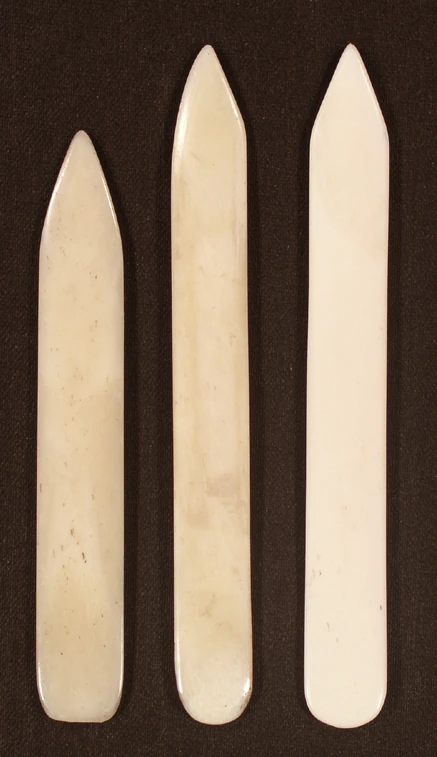
A bone folder is useful because it lets a hand guide pressure through a smooth, shaped surface. It does not make every crease better when pushed harder. For a new paper project, the important choices are where the fold belongs, which part of the tool touches the sheet, and whether the stock can tolerate that contact. Once those choices are clear, the tool becomes a controlled extension of the hand rather than a way to force reluctant paper into submission.
Shape matters more than the name
Dartmouth's repair manual describes folders made from bone or a synthetic material and includes them among ordinary binding tools. The name therefore does not prove the composition of a tool offered for sale. Examine its actual working edge, point, broad face, and finish. A sharp nick, dried adhesive, or dirt can defeat the purpose of a smooth contact surface even when the folder is sold as professional equipment. [1]
Before choosing a shape, identify the task. Guiding a fresh fold, working a small corner, and rubbing down a broad area do not call for the same contact. The point can locate a small area, while the broader edge distributes pressure differently. This is a practical description of geometry, not a claim that one material or shape is best for every paper. Let the intended movement determine which surface you consider using.
Begin with a fold you have located
On expendable stock, bring the intended edges into alignment before sharpening the fold. Check that the sheet has not shifted and that the grain direction has been considered. The folder should refine an established bend, not chase two wandering edges into place. If the first alignment is wrong, repeated rubbing makes the wrong line more permanent. Pause while correction is still a layout decision rather than a damaged crease.
Use a clean, stable surface and keep the sample supported. Compare a light pass with the result you need instead of assuming that a shiny line indicates success. The aim may be a clean turn without surface change. If the paper cracks, scuffs, or becomes visibly polished, reassess the stock, direction, or contact. These are proposed workshop observations, not evidence of a measured pressure threshold that can be applied to every paper.
Pressure leaves a record
Arthur Green's account of an inherited folder describes wear from repeated bookbinding use and interprets the tool's shape in relation to that work. It is a direct account of one tool, not a rule for dating all folders by colour. It makes a useful broader point: the working surface and the repeated action influence each other. Examining a tool's edge is therefore part of preparing to use it, not merely a matter of keeping the bench tidy. [2]
The same principle applies to residues. A folder used near adhesive should be checked before it touches clean paper. A separate clean tool or clearly separated work stages can reduce accidental transfer. Do not oil an unknown folder and immediately use it on important material in pursuit of a smoother feel. Product care should follow reliable instructions, and any possible transfer belongs in an expendable-material assessment rather than on a finished artwork.
A crease and a score are not interchangeable
A crease is a lasting fold; scoring prepares a line for folding with a suitable tool and method. The distinction matters because a maker who presses a narrow point deeply into paper may alter or weaken the surface rather than merely guide the bend. Follow the stock manufacturer's or a reliable technique's recommendations for the intended material. Thin paper, coated card, and a paper-covered board should not automatically receive the same treatment.
For a small edition, make a labelled dummy before treating the full stack. Note paper, orientation, tool surface, and the visible result. The record need not give an invented force value or claim scientific testing. It should allow the next copy to be made consistently and make a failure understandable. If a coating cracks at the fold, changing the design may be more useful than trying a larger folder and increasing pressure.
Keep the tool out of uncertain historic surfaces
A raised corner on an old pastedown may look like something to rub flat, but the underlying cause and the paper's condition may be unknown. A folder cannot determine whether an adhesive is failing, a board is changing shape, or vulnerable media are present. Do not press a lifted historic leaf simply because the tool is associated with conservation. In that setting, it is a treatment instrument used within an examination and material plan.
A new-book model and a valuable original need different permissions. On a model, experimenting with contact can teach useful limits. On an original, the same experiment can polish, fracture, stain, or obscure evidence. The practical boundary is ownership of expendable material and a justified task, not whether a tool looks traditional. When a surface is uncertain, preserve its present condition and seek advice rather than using pressure as the diagnosis.
A folder earns its place through deliberate contact: align the work, select a suitable edge, inspect for defects, and use only the pressure the task requires. Keep the result tied to a sample and a purpose. That method improves consistency in new work and restraint around old material. The tool's value lies in making a chosen fold more controlled, not in promising that every crease, wrinkle, or lifted surface should be flattened.
Sources
References below support the factual explanations in this article. Read each source within its stated scope and context.