
Conservation Notes · FIELD NOTE 27
Shelving Books Without Pulling at the Headcap
What is the safest way to remove a book from a shelf?
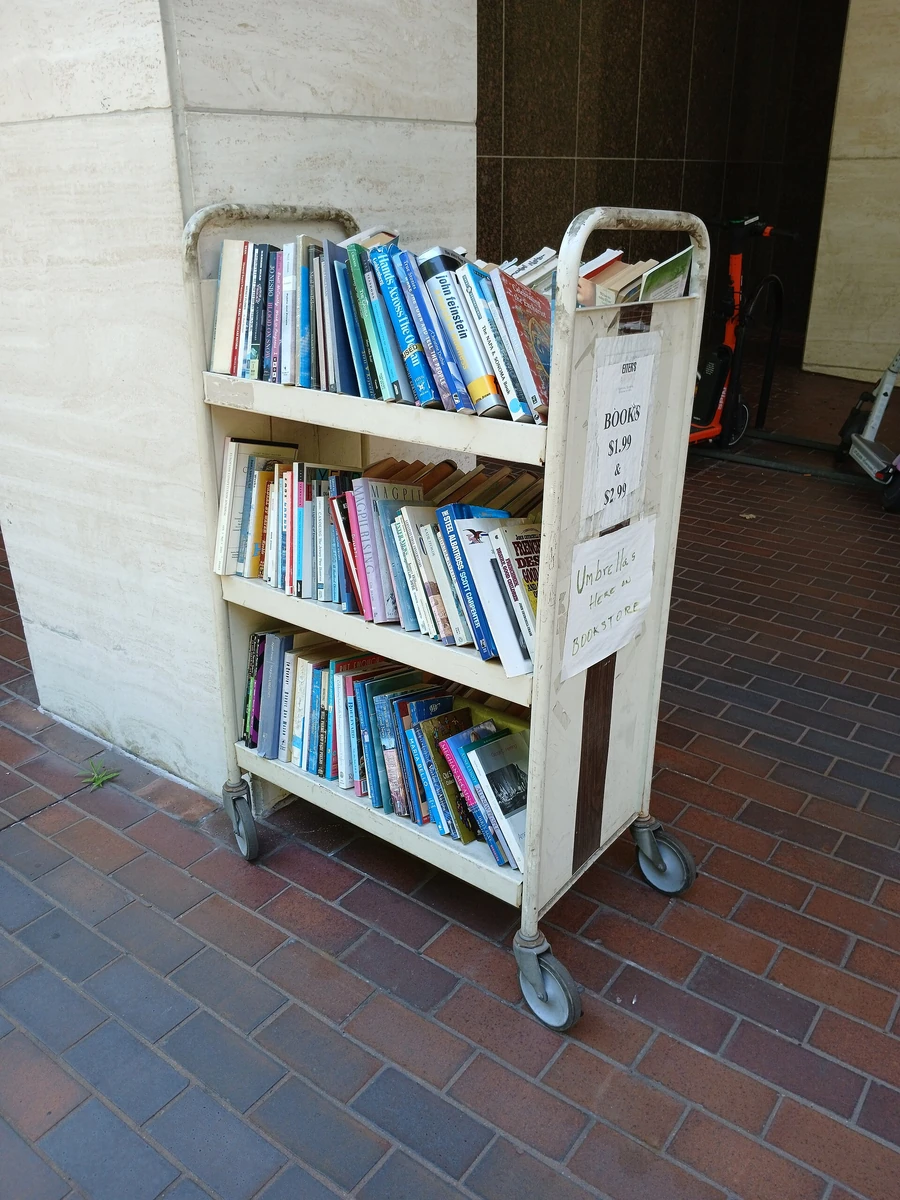
The moment a book leaves its shelf is short, repeated, and easy to overlook. A finger hooked over the top of the spine may retrieve it quickly while loading one small part of the cover again and again. Safer shelving begins before that gesture: make room, plan the landing place, and decide whether the particular volume can be moved normally. The aim is a repeatable handling routine that supports the book's body instead of relying on its most accessible edge.
Prepare the destination first
Clear a clean, stable surface before retrieving the volume. Remove drinks, loose equipment, and anything that will force an awkward change of grip. If the book needs a cradle or another support, have it ready. The Library of Congress includes preparation of the landing space in its handling guidance. That simple sequencing matters because a handler carrying a vulnerable object should not have to rearrange the work area while searching for somewhere safe to put it. [1]
Consider the route as well as the destination. A heavy volume may need suitable carrying support or help from trained staff. Avoid opening doors, balancing a phone, or taking notes while holding it. These are practical planning choices rather than claims about a universally safe carrying weight. If the move cannot be controlled comfortably, change the arrangement before retrieving the book. Its presence on a shelf does not prove that ordinary one-handed handling is appropriate.
Create space beside the volume
The Library of Congress recommends gripping the middle area at both sides of the spine rather than tugging its top, with room made by moving neighboring books appropriately. The action should not force adjacent volumes into a damaging position. If the shelf is so crowded that a secure grip cannot be obtained, address the crowding. A tightly packed row should not turn a fragile headcap into the only available handle. [1]
Do not use protruding headbands, labels, straps, or fragments as grip points. A feature that seems firmly attached may connect through a weakened layer hidden beneath the cover. Likewise, sliding a book past a rough shelf edge or an intrusive bookend can catch a vulnerable corner. Look at the immediate surroundings, not only the target volume. Retrieval is an interaction between object, shelf, neighbors, and hands rather than a technique performed in empty space.
Similar heights make support easier
The National Archives recommends shelving books of comparable size together and storing large volumes horizontally when appropriate. The purpose is support, not visual uniformity. A short volume beside a much taller one cannot support the full height of its neighbor in the same way. A leaning row also changes how weight is shared. Before purchasing protective accessories, check whether a better grouping and a sound bookend can remove an avoidable handling difficulty. [2]
Flat storage introduces its own access question. A large atlas beneath a high stack cannot be consulted without moving other weight first. Plan a manageable arrangement in which the necessary movements can be completed under control. Do not drag a lower volume out while the stack remains on top of it. The best position in isolation may be a poor practical choice if it guarantees rubbing, tipping, or hurried rearrangement whenever the object is used.
Condition can change the method
A book with loose boards, friable decoration, or powdering leather may require an enclosure or a different retrieval plan. Do not apply the sound-book grip automatically to a visibly unstable covering. Record the problem and obtain appropriate advice. A container that supports the whole volume can sometimes reduce direct handling, but its removal sequence should also be understood. Opening an unfamiliar box at the shelf while its contents shift does not improve control.
For a shared collection, place handling information where it can be read before retrieval. Identify any required support and who should be contacted if the condition changes. The note should describe the limitation precisely rather than simply saying fragile. A loose front board, for example, explains why supporting the complete assembly matters. Clear instructions reduce the need for each new reader to discover the same weakness through an unsuccessful handling attempt.
Returning the book completes the operation
Check that the receiving space remains clear and that a neighboring volume has not slumped into it. Support the book while it is guided back, rather than pushing only its spine covering. Leave it upright with appropriate support or return it to its planned horizontal position. Do not wedge it into a gap that has become too narrow. A retrieval routine that ends with forced reshelving merely moves the concentrated stress to a different moment.
If something detaches during ordinary handling, stop and preserve the association. Note what happened without repeatedly reproducing the movement for photographs. A short dated record can distinguish damage noticed on retrieval from damage known to have occurred during it. That distinction is useful to collection staff and avoids inventing a cause simply because the defect became visible in someone's hands. Document the event, the component, and the current access restriction.
Good shelving is a small system of decisions: suitable grouping, enough room for a secure grip, a prepared destination, and an equally deliberate return. It does not need elaborate equipment for every sound volume, but it does need attention to exceptions. By shifting the routine away from the headcap and toward support of the whole object, repeated everyday use can become less demanding without turning retrieval into a test of the binding's strength.
Sources
References below support the factual explanations in this article. Read each source within its stated scope and context.