
Archive Visits · FIELD NOTE 34
Albums and Scrapbooks: Layers That Need Their Own Plan
Why are old albums difficult to house?
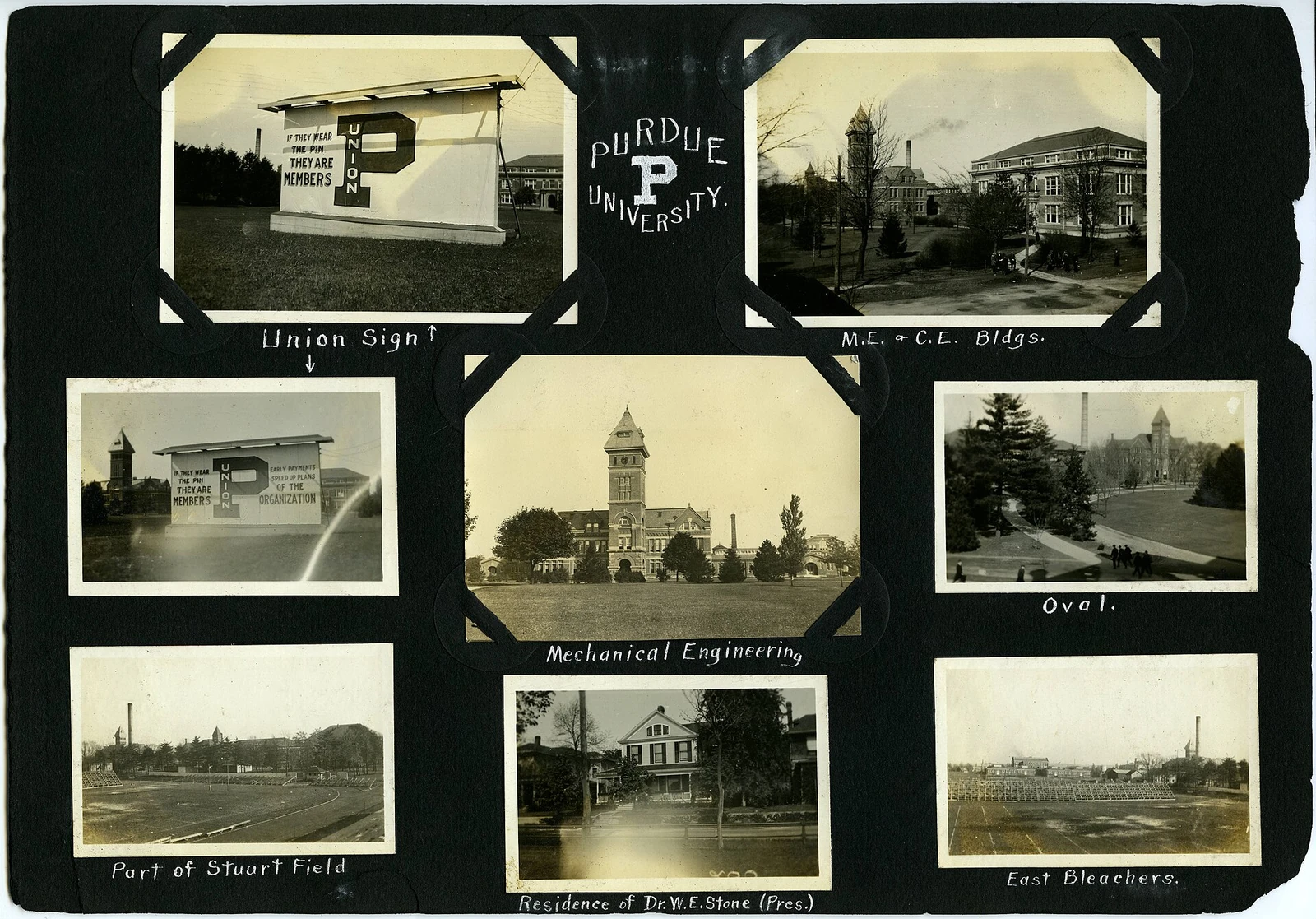
An album is an arrangement of relationships. A photograph beside a ticket, a handwritten caption beneath a newspaper cutting, and a blank space between entries can all carry meaning. Treating the volume as a pile of separate objects risks losing that arrangement. Its preservation plan needs to account for the binding, the pages, the attachments, and the sequence in which someone assembled them.
Map the layers before judging the damage
Start with a description of what is visible without disturbing it. Identify the cover, the page material, the kinds of attachments, and any components already loose. Note whether added objects make the book thicker at the fore-edge than at the spine. This is a description of the current shape, not permission to compress it. A volume that no longer closes evenly should not be forced shut for a photograph.
Mary Lynn Ritzenthaler's National Archives guidance emphasizes the variety of scrapbook materials and the importance of preserving these unique gatherings as units. Its discussion includes brittle pages, failed adhesives, and staining from some attachment materials. That variety explains why a treatment suitable for an unattached sheet cannot automatically be applied to an assembled album containing photographs, writing, and overlapping inserts. [1]
Preserve placement as information
Suppose a hypothetical school album contains a detached concert program between two photographs. It might belong beside one photograph, have been inserted later, or simply have fallen there. Record its found location and any visible evidence before deciding where it belongs. Avoid turning a plausible interpretation into a confident caption. The distinction between original placement and present placement can matter to a later researcher.
Photographs of accessible openings can record relationships, but do not remove attachments to make a cleaner image. Include enough of the page to show location and sequence, then take closer views if safe. Keep a separate inventory for loose pieces and cross-reference their images. A file named only with the subject of a photograph may become difficult to reconnect with the page that gave it context.
Let the weakest layer set the pace
A sturdy cover can disguise weak internal pages. When one leaf carries several heavy attachments, lifting it by a small corner may concentrate movement in an already damaged area. Watch the page as well as the binding, and stop when ordinary turning begins to extend a break. A slow session with fewer openings can be more informative than a complete sequence that sheds material along the way.
The National Archives recommends face-up copying with appropriate support rather than placing scrapbooks face down on a scanner. This distinction is especially relevant when attachments project from a page or folds cannot open fully. A scanner lid cannot know which component is vulnerable. If a layout cannot be recorded without pressure or forced unfolding, document the access limit and consider specialist help. [1]
Avoid filling every gap with a repair
A loose attachment creates an understandable urge to glue it back. Yet the correct location, adhesive compatibility, and effect on adjacent media may all be uncertain. The National Archives advises against improvised tape or glue repairs to heirloom scrapbooks. Keeping a detached piece securely associated with the album can preserve more options than a quick reattachment that becomes difficult to reverse. [1]
Likewise, adding protective sheets is not automatically harmless. Extra layers increase bulk, and insertion itself requires movement across potentially fragile surfaces. Before buying interleaving material, identify the problem it is meant to address: abrasion, transfer, sticking, or separation of a loose item are different situations. Where media are flaking or surfaces adhere, do not pull them apart to create room for a proposed protective layer.
House the album for its actual shape
A box needs to accommodate the volume as it exists, including its uneven thickness and any associated material. Housing that presses the cover down can transmit that pressure to raised attachments. Housing with too much uncontrolled room can allow loose pieces to shift. Plan how the album will be lifted out before ordering or making an enclosure, and keep identification on the outside to reduce unnecessary access.
Library of Congress storage guidance distinguishes ordinary upright shelving from situations requiring flat storage or protective enclosures. For an album, apply that distinction to its weight, stability, and contents rather than its title. A small, sound album and a large volume with detached leaves do not pose the same retrieval problem. Avoid placing a frequently requested fragile album at the bottom of a heavy stack. [2]
Make a copy serve a defined purpose
A digital access copy can reduce repeated handling, but decide what it should preserve. A chronological family narrative may need opening views showing captions and facing pages, while a transcription project also needs readable details. Record skipped pages, sealed folds, and uncertain sequences. Keep the original file order traceable to the physical album. The aim is to make use easier without quietly replacing the maker's arrangement with a modern interpretation presented as fact.
Retain a simple contents list alongside the image files, including page identifiers and loose-item references, so future users can follow those relationships.
Sources
References below support the factual explanations in this article. Read each source within its stated scope and context.