
Conservation Notes · FIELD NOTE 28
Red Rot: When Leather Surfaces Turn Powdery
What should I do if a leather binding leaves red dust?
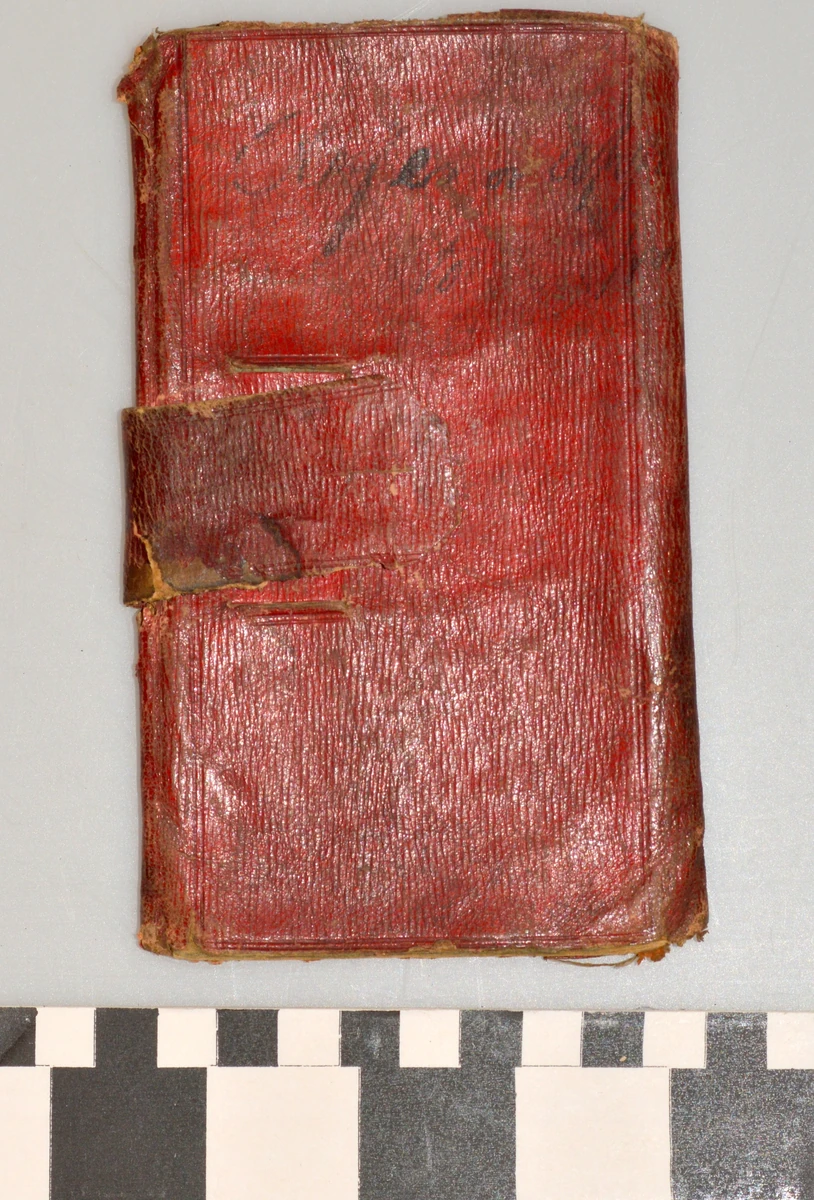
Reddish powder on a shelf or a hand can be the first sign that a leather covering is losing material. The immediate temptation is often to restore its appearance with oil or conditioner. That changes the surface before the problem has been assessed. A more useful first response is to reduce unnecessary contact, keep the volume and any fragments identifiable, and ask what access is needed. Powdering leather presents a containment and handling problem before it presents an opportunity for cosmetic improvement.
A term with a defined meaning
The Library of Congress describes red rot as powdery deterioration affecting leather on many nineteenth- and early twentieth-century bindings, especially where the covering flexes. It notes that the process is not reversible, although stabilization may be possible in some cases. This definition explains why replacing lost appearance with a product cannot be assumed to restore the leather itself. It also belongs to a particular material problem, not every red mark or dusty surface on a book. [1]
Colour alone cannot establish the condition or identify the material. Record powder, cracking, flaking, and their locations without rubbing to produce a sample. Another surface deposit may require a different assessment. Do not call powder harmless merely because it appears dry, and do not equate leather deterioration with mold simply because both can involve deposits. If mold is suspected or exposure raises concerns, seek suitable guidance rather than trying to distinguish conditions through smell or direct contact.
Stop transferring the problem
A powdering cover can transfer material to the pages, work surface, or neighboring books. Plan support before moving it and avoid repeated handling to see how much dust appears. An enclosure or protective arrangement may reduce contact, but it should suit the whole book, including loose boards and decoration. Tell a conservator whether the volume must be consulted frequently or can remain stored, because the intended use affects the available containment and treatment options.
The Library of Congress's book-care FAQ advises against oiling or dressing leather books and recommends boxing or consulting a conservator when the leather is crumbling and spreading dust. It also discusses a protective jacket for some books that need handling. Those options are not interchangeable prescriptions. The appropriate housing or jacket depends on the condition and should not involve wrapping a fragile volume so tightly that its covering abrades during every removal. [2]
Oil does not reconstruct missing leather
A richer colour after applying a product can be mistaken for recovered strength. Appearance and mechanical condition are different outcomes. A household treatment may also introduce material whose effect on paper, decoration, adhesives, and future treatment has not been evaluated. Avoid using a small hidden area as an experiment: that area is still part of the original covering and can contain important evidence of its earlier appearance or construction.
The same caution applies to brushing away powder so the book looks clean. Repeated abrasion can remove more of an already deteriorated surface. If a deposit needs professional cleaning or containment, the decision should be made with the complete object in view. A public guide can explain why a proposed action is questionable without offering an alternative chemical recipe. Retaining a clear account of the untreated condition helps the next person choose a proportionate response.
Ask whether the binding still carries the text
Leather condition and attachment condition are related but not identical. A powdering surface can coexist with secure sewing, while a cracked joint may leave a board unable to support its own movement. Note whether ordinary supported access is possible without stressing loose parts. Do not flex the cover repeatedly to demonstrate a crack. The examiner needs a description of the limitation, not evidence obtained by making the limitation worse.
Consider a hypothetical reference book available in another copy and a unique annotated volume. Both may shed leather, but their immediate reading needs differ. The reference text might be accessed elsewhere while the original is housed; the annotated copy may require a supervised consultation or digitization assessment. This is an access comparison rather than a value judgment. A decision should reflect what is unique about the physical object as well as the information it contains.
Make the consultation practical
Provide the title or identifier, overall dimensions if already known, photographs obtainable without disturbance, and the locations of powdering or breaks. Explain previous products only when their use is actually known. Do not infer an oil treatment from a glossy patch or invent a history because the covering looks familiar. A factual account of what was observed and what has been applied is more useful than a confident material diagnosis unsupported by examination.
Keep fragments labelled with the volume and ask how the proposed housing will accommodate them. If a treatment is suggested, discuss its goal: reducing transfer, stabilizing a surface, improving access, or repairing attachment. These are distinct outcomes. A conservator may be able to address one while leaving visible wear. Knowing that in advance helps avoid judging a responsible treatment solely by how closely the book resembles a new leather binding.
Red rot is not a cue to replenish leather with a household product. It is a reason to consider material loss, surface transfer, attachment, and access together. Reduce unnecessary disturbance, retain the evidence, and seek advice where the object or its use warrants it. A realistic care plan can preserve an important book without promising to reverse deterioration or requiring a cosmetic transformation that conceals what remains fragile.
Sources
References below support the factual explanations in this article. Read each source within its stated scope and context.