
Paper and Grain · FIELD NOTE 42
Paste Paper: Brushwork, Pattern, and Book Cover Decoration
How is paste paper patterned, and where does it appear in a book?
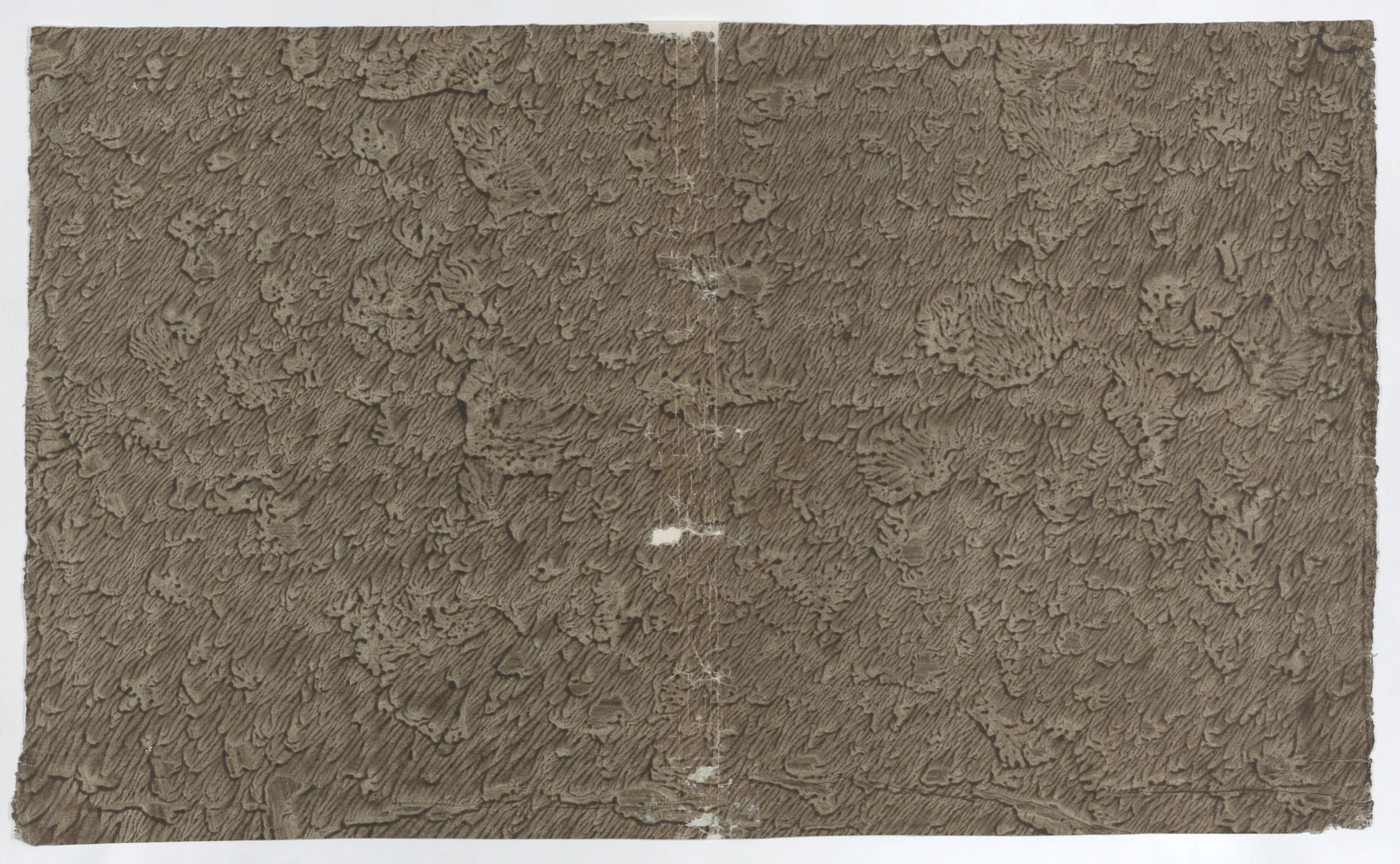
Paste paper is a decorated paper made by working colour into a wet paste on the surface of a sheet. Brushes, rollers, fingers, combs, or other tools can leave marks as the surface is manipulated. The Metropolitan Museum of Art describes paste papers as coloured wet paste applied to paper and worked with brushes and hand tools. That definition is a useful starting point; it does not mean that every patterned paper with a similar appearance was made by the same process.[1]
Paste papers have been used in bookbinding as covers, endpapers, and decorative surfaces. A pattern can be the result of direct brushwork, repeated impressions, or a combination of techniques. The surface records how material moved while wet, but a finished sheet may have been trimmed, folded, pasted down, or altered by later use. Read the pattern as evidence of making while allowing for a history beyond the original decoration.
Colour and motion on a sheet
When looking at paste paper, pay attention to the direction and rhythm of the marks. A broad parallel stroke suggests a different movement from a small repeated impression; a combed field may show evenly spaced ridges or lines. Record what is actually visible before naming the tool. Many tools can produce similar marks, and a pattern alone may not identify a particular maker or workshop.
The paste layer can vary in thickness and opacity, and colour can shift across the sheet. A close view may reveal ridges, gaps, overlaps, or areas where the paper underneath remains visible. These physical details matter because they affect how the surface responds to friction, pressure, and moisture. Do not run a finger across the pattern to feel its texture; oblique light or a photograph can reveal relief without abrasion.
Patterns can be repeated without being identical
Some paste-paper processes produce a pattern by repeating a tool movement across one or more sheets. Repetition can help a binder coordinate decorative material across covers or endpapers. Yet hand-applied marks vary, and trimming may change the relationship between the pattern and the final book. A pair of boards that look coordinated may have been cut from different areas of a larger sheet.
The Met’s collection includes a nineteenth-century object titled “Green paste paper book cover,” catalogued as a relief print on a sheet. It provides one documented example of paste paper associated with a book cover, but the catalogue’s specific medium description belongs to that object. It should not be generalized to every paste paper or treated as a complete technical account of its manufacture.[3]
From decorated sheet to book component
When paste paper is attached to a board or folded into an endpaper, its role changes from a loose decorated sheet to part of a binding. The paper may turn around an edge, meet a spine covering, or sit next to a hinge. Those transitions can explain where abrasion or lifting occurs. Looking only at the center of the pattern misses how the sheet was cut and used in the object.
Use raking light to see changes in surface and inspect the edges without lifting them. If the paper is attached, do not peel it back to discover the reverse side or expose an adhesive layer. A detached fragment should be kept with the book in a labelled, non-contact enclosure. A conservator can assess whether the pattern, pigment, and paper are stable enough for more direct examination.
Recognize later changes
A decorative sheet can be patched, trimmed, pasted over, or reused. A book may have replacement endpapers or a cover added during a later rebinding. Changes in colour or pattern alignment can help identify transitions, but they do not prove a date on their own. Compare the sheet with catalogue information, other copies, and construction evidence before assigning a production history.
Record each observation separately: the colour, visible technique, location on the binding, and signs of loss or repair. If the paper appears shiny, brittle, or cracked, describe those features rather than assuming that the surface contains a particular coating. Historic paste formulations and later treatments vary. Material identification should remain provisional unless an authoritative record or examination supports it.
Care for a vulnerable surface
Paste paper can be vulnerable to abrasion, pressure, water, and adhesive contact, depending on its materials and condition. Keep the sheet away from prolonged direct light and rough handling. When opening a book with decorated endpapers, support the cover and avoid pressing the pattern against a desk or cradle edge. Do not use a damp cloth, eraser, tape, or household cleaner on the surface.
If loose pigment, flaking, or an active tear is visible, close the book only if it can be done without force and seek conservation advice. A protective enclosure can reduce abrasion and dust, but it should not press raised texture or distort the boards. For display, limit exposure and support the volume in a stable position. Conservation decisions should account for both the paper support and the coloured paste layer.
Making new paste paper responsibly
For a contemporary craft exercise, use new paper and materials intended for that purpose. Try brush or tool patterns on small samples, keeping a record of the paste, colourant, and working method. This helps distinguish present-day experimentation from historical evidence. A modern practice sheet can teach how a mark forms without requiring anyone to test or imitate a historic object.
Do not assume that a recipe suitable for new craft paper is safe for a rare book. Ingredients, acidity, water content, adhesives, and drying behavior may be different from those used in a historic sheet. When a repair or reconstruction is proposed, document the goal and consult a trained conservator. Aesthetic matching can conceal evidence or introduce materials that age differently from the original.
What a pattern can tell you
A paste-paper pattern can reveal the motion of a brush or tool and the way a sheet was organized for a binding. It can also connect the book’s surface to broader printing and decorative practices. The pattern alone cannot establish a precise date, region, or maker. Those claims require comparison with documented examples and reliable catalogues.
The most useful description is visual and measured: identify the sheet’s location, describe how the marks are arranged, and note how the paper meets the boards or text block. The Met’s records offer a documented point of comparison, while its general explanation describes the basic working of coloured paste. With those boundaries clear, paste paper can be appreciated both as pattern and as a material component of a book.
Sources
References below support the factual explanations in this article. Read each source within its stated scope and context.