
Binding Structures · FIELD NOTE 38
Limp Vellum Bindings: Flexible Covers, Laces, and Use
What makes a limp vellum binding different from a board binding?
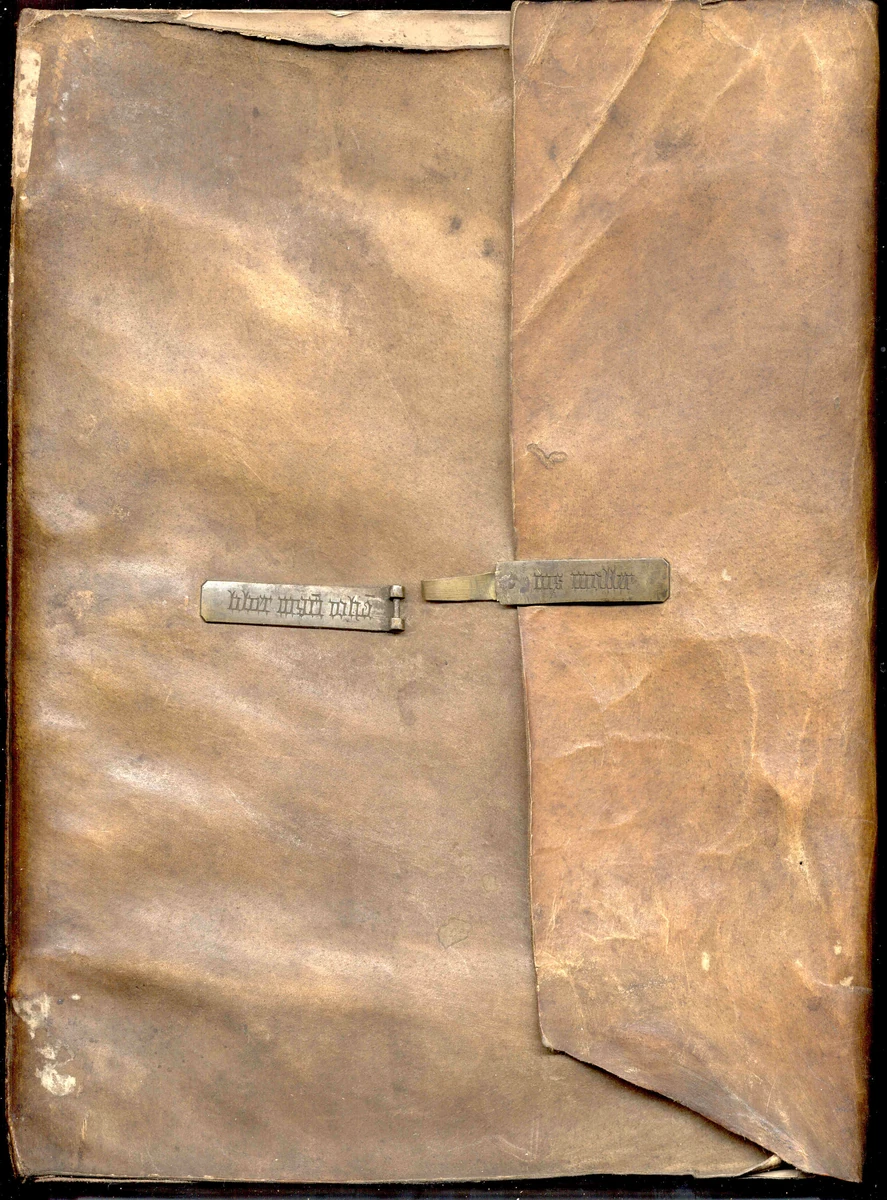
A limp vellum binding is built around a cover that bends rather than holding its shape like rigid boards. The description refers to a structural arrangement, not merely a pale surface or a book that feels soft today. A cover can become flexible because of its original construction, later wear, loss of board support, or damage; those possibilities need to be separated before the book is classified. The safest starting point is to look at how the cover, sewing, and text block meet.
Terminology is not perfectly stable. The Library of Congress notes that “parchment” and “vellum” are often used interchangeably, and explains that its own study uses vellum for the binding structures under investigation, including limp and stiff-board bindings. In a catalogue or article, explain which usage you mean rather than treating one vocabulary as universal.[2]
Look at flexibility in context
Observe whether the cover wraps around the text block with no rigid boards, whether it extends beyond the pages, and how its edges are finished. A limp binding may include ties or laces, but their presence is not required by the word “limp.” Look also at the spine: sewing supports may connect the sections to the covering, or a separate spine construction may be visible. These features should be described individually rather than compressed into a single label.
Do not test flexibility by bending the cover back and forth. A skin cover can respond to moisture and humidity changes, and a brittle or distorted cover may crack when flexed. The book’s present behavior is not a reliable reconstruction of its original condition. A careful record might say that the cover is flexible at the fore-edge but stiff near the spine, without suggesting that the stiffness is original or intentional.
One catalogue example, not a template
The British Library catalogue record for Add MS 48180 describes a particular manuscript as having a limp vellum cover and green and gold silk laces. That is useful evidence for one object, including its specific covering and surviving ties. It does not mean that every limp vellum binding had silk laces, used the same colors, or followed the same construction. A catalogue description is strongest when read as a claim about the item it identifies.[1]
When comparing another book, ask which details genuinely match the record. Are there flexible covers? Are laces present, or only holes where ties may have been fixed? Are the sewing supports visible? Is the manuscript date independent from the date of the binding? A binding can be renewed or altered, so the age of the text and the age of the cover should not automatically be treated as identical. Separate what the object shows from what an archival description reports.
Skin material is responsive to its environment
Animal skin is not a static sheet. The Library of Congress describes parchment or vellum as highly hygroscopic and warns that changes in relative humidity can cause rapid and substantial deformation. It gives examples of vellum shrinking, breaking, or warping when the environment becomes too dry, and notes that wide humidity fluctuations can produce dimensional change in bindings. This is why a flexible cover should not be “flattened” by pressing it under weight.[2]
The response of one object cannot be predicted from a short glance at its surface. The source notes that skins from different animals and production traditions can have different aging and reaction characteristics. A limp cover may also be affected by sewing, adhesives, repairs, and the way it is stored. It is safer to think in terms of stable conditions and supported handling than to prescribe one humidity number for every book. Libraries and conservators assess materials and collection circumstances together.
Read the closure without pulling it
Ties and laces are particularly tempting to test because their purpose appears obvious. A surviving lace may have been shortened, replaced, or weakened, and its loose end can catch on adjacent objects. Note where it attaches, whether there are paired attachment points, and whether it lies naturally against the cover. Do not pull it tight to see how the cover closes. Tension may tear a hole or put strain on a sewing support.
If a tie has detached, keep it with the book in a labeled enclosure or a separately identified packet that does not touch vulnerable surfaces. Do not tie it around the volume for storage. A conservator can determine whether it belongs to the binding and whether reattachment is appropriate. Photographs and a simple diagram of where the tie was found can preserve useful information without making the object perform.
Support the book during use
A flexible cover does not mean the text block should be allowed to sag. When reading or photographing a volume, support the boards and sections so that the binding is not held open by its own weight. The Library of Congress’s digitization guidance recommends book supports and avoiding a forced-flat opening for bound materials. A cradle or shaped support can help maintain a modest opening angle, but the suitable angle depends on condition and structure.[3]
For a limp cover, pay attention to the cover edge as well as the spine. A support should not pinch a projecting tie or create a sharp crease in the skin. Turn leaves from their strongest supported area, and stop if the cover begins to pull away or the sewing sounds or looks strained. If the book is part of a special collection, ask staff before moving a cradle or changing its opening position.
Common classification errors
A soft-looking leather binding is not automatically limp vellum. “Limp” describes the absence of rigid board support in the cover structure; “vellum” describes a skin material under a particular historical or institutional usage. Surface color and texture alone cannot reliably establish the animal species or tanning history. If material identification matters, use an authoritative catalogue or conservation examination rather than a visual guess.
Likewise, an old binding that now collapses may once have been supported by boards or stiffeners that are missing. Look for sewing paths, attachment holes, folds, and surviving layers before applying a structural label. A responsible description can say “flexible skin cover, possibly limp binding; construction not confirmed.” Precise uncertainty is more useful than confident but unsupported terminology.
Preserve evidence through restraint
Record the cover material as identified in a reliable source, then separately describe its current condition: tears, folds, missing ties, abrasions, distortion, or loose sewing. Note whether the cover is attached to the text block and where it moves. Photographs of the book closed and at its naturally supported opening can establish a baseline. Avoid cleaning, applying moisture, or adding adhesive, since such steps can alter the surface and complicate future examination.
Limp vellum bindings reward close attention because their flexibility is a result of structure, material, and use working together. The British Library example demonstrates one documented arrangement; the Library of Congress research explains why skin materials deserve stable conditions and gentle support. Read each book on its own terms, distinguish catalogue facts from visual observations, and leave treatment decisions to a conservator when the cover is fragile or historically important.
Sources
References below support the factual explanations in this article. Read each source within its stated scope and context.