
Paper and Grain · FIELD NOTE 14
Laid Paper: Lines, Chain Lines, and Making Evidence
What do the lines in laid paper mean?
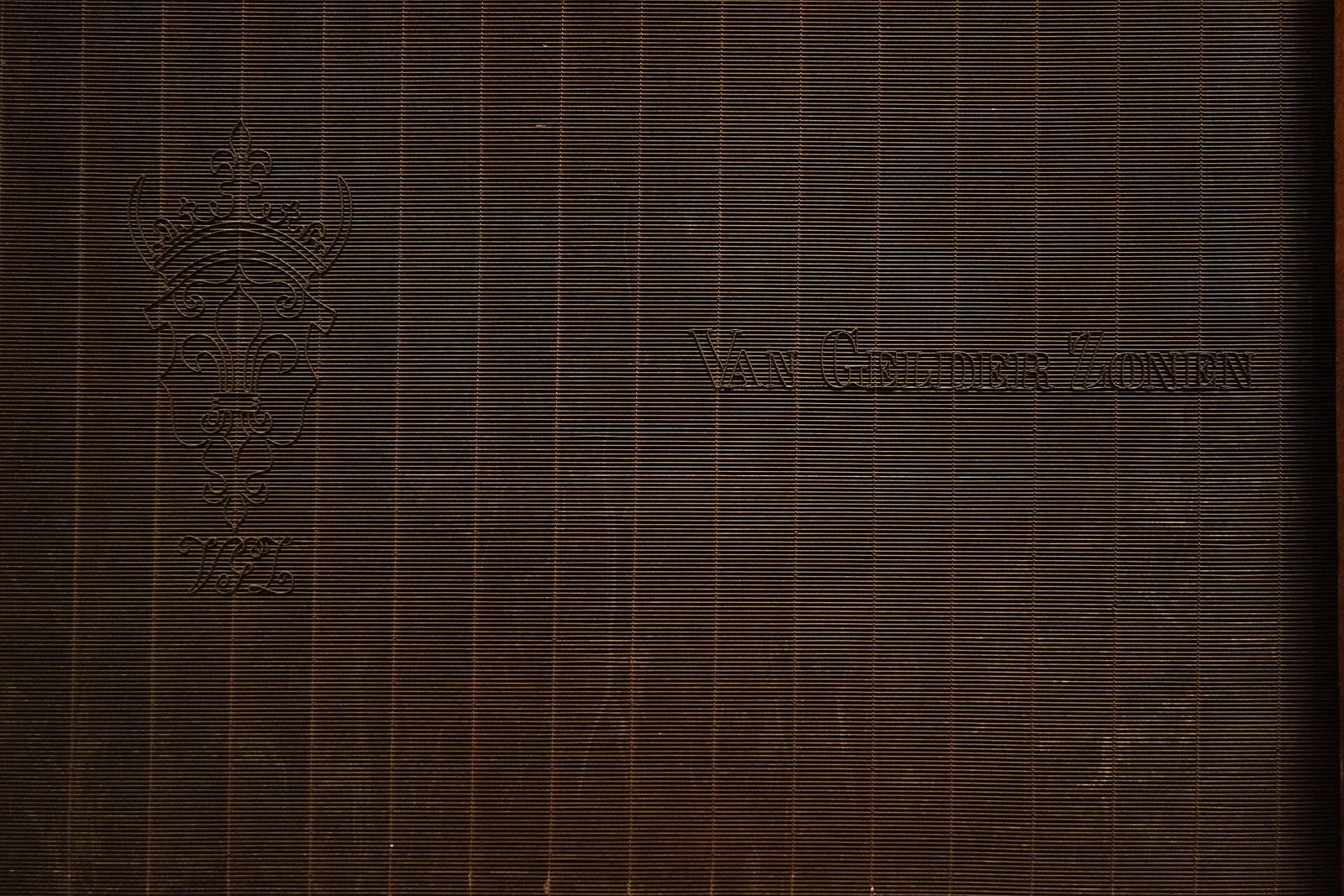
Hold a safely supported sheet in transmitted light and its apparently plain surface may reveal an ordered pattern. Closely spaced lines cross more widely spaced ones, recording something about the surface on which the paper formed. In laid paper, these marks are manufacturing evidence rather than printed ruling. Learning to distinguish them can improve a description, but it cannot independently identify a maker, date a book, or prove that every leaf belongs to its original binding.
Two rhythms in the sheet
The Museum of Fine Arts' CAMEO entry describes laid paper through the pattern left by a wire screen, with heavier, more widely spaced lines crossing finer parallel ones. The Library of Congress's newspaper glossary likewise distinguishes laid and chain lines. Begin with that visible relationship instead of searching immediately for a watermark. A regular pattern across the sheet provides a different kind of evidence from a single emblem or word. [1] [2]
On a separate sketch, show the two line directions and label the view's orientation. Record which page or leaf was observed, rather than saying simply that the book has laid paper. A book can contain text paper, endpapers, inserted plates, and later repairs made from different stocks. An accurate note names the component inspected. It avoids allowing one easily visible endleaf to stand in for an unexamined text block.
Reflection and transmission show different things
Light reflected from the surface emphasizes texture, media, creases, and wear. Light passing through a sheet can reveal variations in formation. These views are complementary, not interchangeable. A printed line lies in a different relationship to the surface than a pattern formed within the sheet. If a mark is visible only in one view, record that fact rather than changing the lighting repeatedly until it resembles a familiar illustration.
Not every object can safely be lifted against a lamp. A leaf may be brittle, attached to a volume with a restricted opening, or carry vulnerable media. Use existing digital images or ask collection staff whether appropriate transmitted-light examination is possible. Do not put an unsupported leaf over a hot light source or bend a page to make it fit an improvised setup. The availability of a revealing view does not remove the object's handling limits.
A watermark belongs to a larger comparison
A watermark can provide a distinct shape, while laid and chain lines give information about its surrounding formation. Record the design's orientation relative to the observed leaf and note any cropping or obscured areas. A partial mark should remain partial in the description. Completing it from memory of a catalogue image can create false confidence, especially when several similar designs existed or when the available image reverses the original view.
Research on computational extraction of chain and laid lines shows that scholars use these features as comparative paper evidence, often through specialized imaging and analysis. That does not turn a casual visual match into proof of a common maker or paper stock. It demonstrates why measurement method, image quality, and comparison context matter. The introductory reader can contribute a clear observation while leaving a stronger identification to a properly documented investigation. [3]
Lines are not a calendar
A manuscript date, a printed publication date, and the date of a binding are separate kinds of information. Even an established paper identification would need to be interpreted alongside them. An inserted leaf may be older than its present use, and a book may have been rebound. Treat paper features as part of a larger argument. They can support or challenge a proposed history without reducing the whole object to one material clue.
Imagine two hypothetical leaves that show similar line spacing. One is a text leaf and the other a later-looking endpaper. Their resemblance is worth recording, but it does not establish that both were made together or bound together originally. Compare other evidence, such as dimensions, printed matter, attachment, and known provenance. This example illustrates an inference limit; it does not report a successful attribution or suggest removing leaves to obtain additional measurements.
Keep condition separate from formation
A crease, tear, or weak fold can cross the manufacturing pattern. Describe it independently. If a line appears irregular, ask whether the observation might reflect printing, a repair, an imaging artifact, or damage before naming it a chain line. Avoid tracing an uncertain feature with a finger or rubbing the sheet to make it clearer. The point is to distinguish information already present, not to add a fresh mark while investigating an old one.
A useful examination note might state that regularly spaced crossing lines were visible in an approved transmitted-light image, that only part of a watermark was captured, and that no maker identification was attempted. Add the image reference and orientation. Such a note is modest but reproducible. Another researcher can revisit the same evidence instead of inheriting an unsupported conclusion presented as an established property of the paper.
Laid paper becomes informative through a sequence: identify the two rhythms, establish which component carries them, record the viewing method, and compare cautiously. The marks connect a sheet to manufacture while remaining part of an object with its own later history. Their value lies in that documented relationship, not in the promise that a few visible lines can tell the whole story of a book.
Sources
References below support the factual explanations in this article. Read each source within its stated scope and context.