
Paper and Grain · FIELD NOTE 11
Grain Direction: The Orientation Hidden in Every Sheet
Why does paper grain matter when folding or repairing?
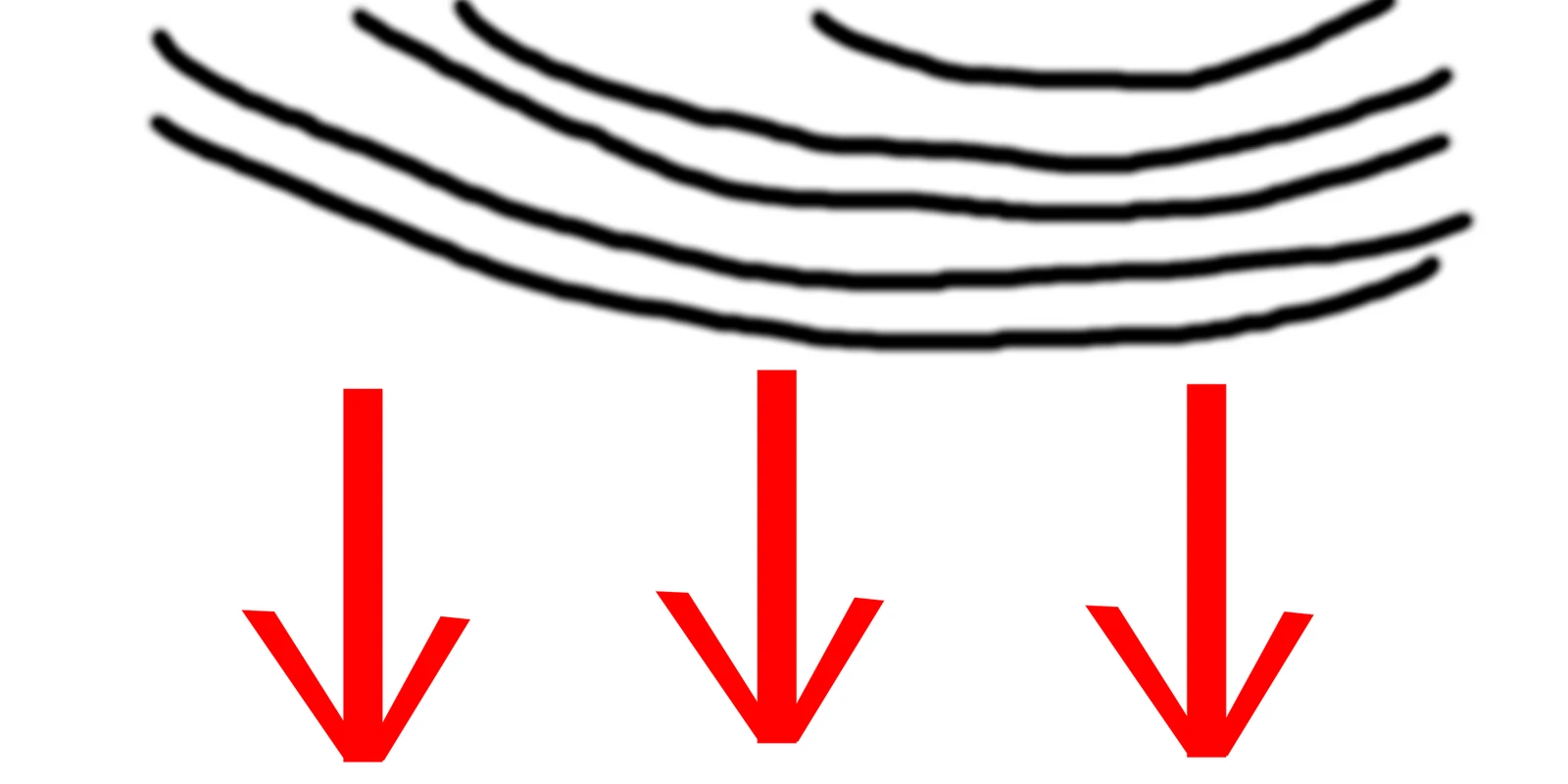
Before cutting paper for a book, decide which way its fibres should run. Two sheets of identical size and weight can behave differently at the fold because their fibre orientation differs. Grain direction describes this directional tendency; it does not certify that a paper is handmade, permanent, or suitable for conservation. For a new notebook, understanding grain can prevent an avoidable opening problem. For a historic volume, it provides a question to investigate without testing the original pages to destruction.
Think in axes before thinking in sheet sizes
A sheet has a long edge and a short edge, but neither automatically tells you its grain. Grain long means the principal fibre direction runs with the longer dimension; grain short means it runs with the shorter. Once the sheet is cut, those descriptions may change even though the fibres have not turned. Draw an arrow on a disposable cutting plan rather than relying on a remembered label from the original packet.
Dartmouth's repair manual explains that paper and board have directional properties and recommends matching grain in materials joined together. It also describes gentler bending with the grain and greater resistance across it. This is useful workshop guidance for new materials, not permission to flex a brittle leaf in a valuable book. The relevant distinction is between a stock sample selected for examination and an object whose existing condition limits what can safely be tried. [1]
A comparison you can make on expendable paper
Take an unimportant sheet from the same stock as the proposed project. Keep the comparison gentle: curve it in one direction, release it, then curve it across the other axis. You are comparing resistance, not attempting to produce a permanent crease. Mark the direction that appears easier to bend. If the result is ambiguous, retain that uncertainty and check supplier information rather than increasing force until the sheet gives an answer.
Repeat the comparison on another offcut before laying out the entire project. This is a suggested planning exercise, not a reported laboratory test. It helps expose an everyday mistake: assuming that all pieces from a packet share the orientation you expected after trimming. A sample that has been rotated on the bench can quietly reverse a layout decision. Keep the direction arrow attached to the cutting diagram and to the remaining parent stock.
Why the spine is the useful reference
For many new folded books, a practical aim is to align the grain with the fold and the spine. Think of the page turning around an axis rather than lying permanently flat. If its natural flexibility works with that axis, less persuasion is needed during use. This explanation concerns the mechanical relationship; it should not become an absolute judgment that every differently oriented historical binding was badly made or should now be reconstructed.
Hand Papermaking describes grain through a sheet's inclination to curl, fold, or tear preferentially in a direction. That broader description matters because a sheet may reveal orientation through more than one behaviour, and the tendency need not be equally obvious in every paper. Surface texture, thickness, coatings, and formation can complicate a quick impression. Treat the result of a casual workshop comparison as a material observation, not a complete account of fibre distribution. [2]
Plan the book and its cover together
Imagine a small notebook cut from a larger sheet. One layout yields more pieces; another puts the fibre direction parallel to the future spine. Count usable leaves for both arrangements before choosing. A slight saving in paper can disappear if the finished book resists opening. The useful calculation therefore includes intended page movement, final format, and waste, rather than maximizing the number of rectangles that fit on the parent sheet.
Board and covering paper introduce another planning layer. If you have already chosen the text orientation, record the intended spine direction on a separate cover sketch. Do not let the outside decorative pattern determine every hidden material orientation by accident. When the appearance and the preferred construction conflict, a smaller book, a different sheet size, or another covering material may be a better answer than forcing the original layout to work.
Keep moisture tests away from collection objects
Paper can change shape when moisture conditions change, but deliberately wetting a historic corner to reveal grain is an intervention. The corner may carry sizing, colour, printing, or an earlier repair that reacts unpredictably. The same restriction applies to tearing off a strip or sharply folding a page. Information about manufacture is not worth creating fresh damage, especially when the reading task can be completed without proving a direction.
A condition record can instead say that grain has not been established. If the volume has opening resistance, document where the resistance becomes apparent without repeatedly recreating it. A conservator can consider grain alongside paper condition, sewing, linings, and board attachment. This keeps a plausible material explanation from becoming a premature diagnosis: a reluctant opening may involve several interacting causes, and changing one component without understanding the others can make access worse.
Good grain planning begins before the first irreversible cut. Establish the orientation on expendable stock, mark it clearly, compare alternative layouts, and carry the arrow through the text and cover plans. When examining an existing book, use the concept to ask better questions rather than to justify physical tests. The aim is a sheet whose movement suits its role, with uncertainty recorded whenever the available evidence cannot support a firmer conclusion.
Sources
References below support the factual explanations in this article. Read each source within its stated scope and context.