
Paper and Grain · FIELD NOTE 12
Rag Paper and Wood-Pulp Paper: Reading Material Clues
How can I think about paper composition without overclaiming?
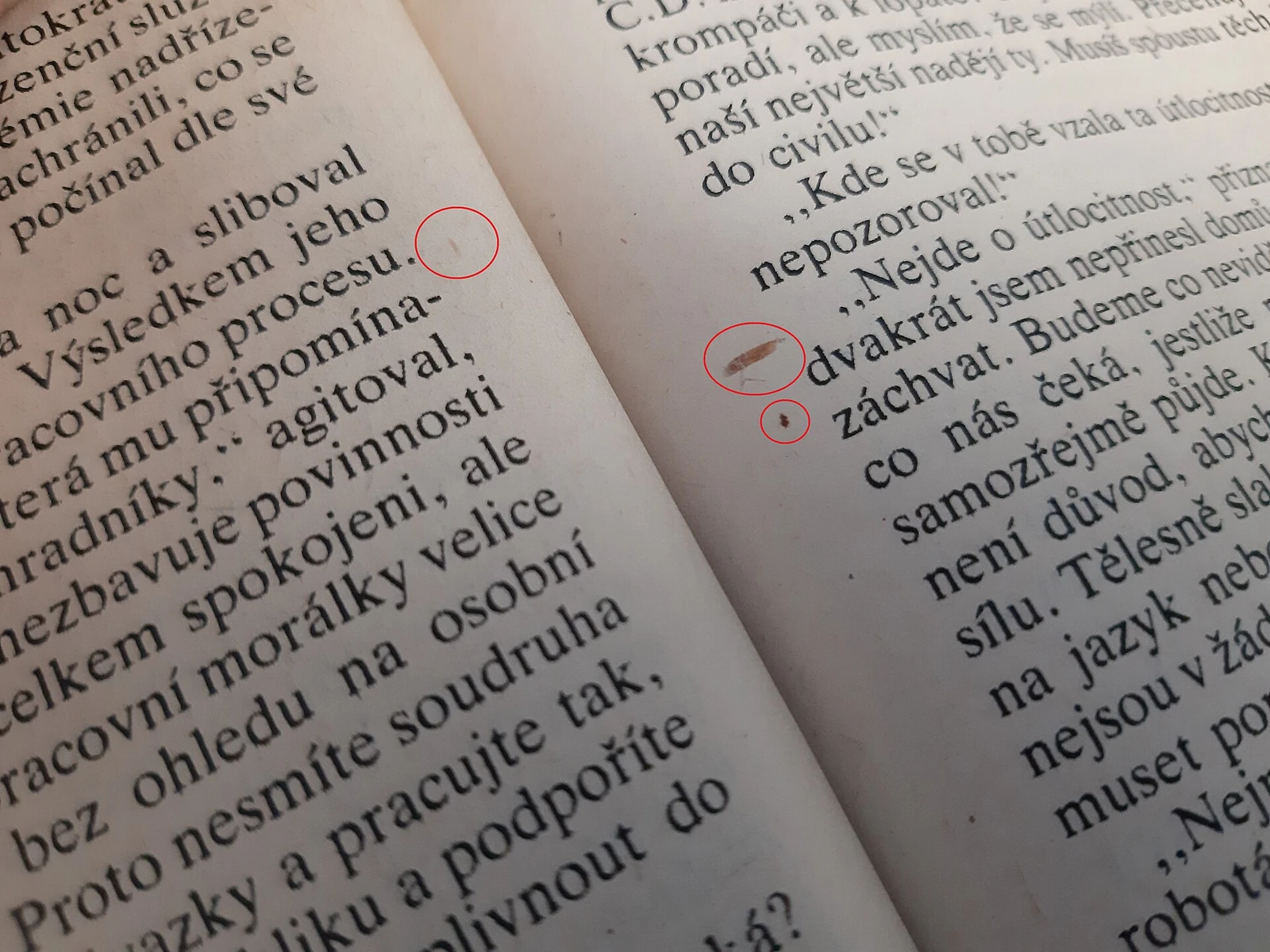
Rag paper and wood-pulp paper are useful categories, but they are poor shortcuts for judging an individual book. A pale leaf is not automatically cotton, a brown one is not automatically groundwood, and an old sheet that still bends does not prove a particular recipe. To compare these materials responsibly, separate fibre source, manufacturing process, present condition, and intended use. Each tells part of the story, and none can safely replace the other three.
Fibre source is one layer of the description
Rag-based paper uses fibres associated with textiles, while wood pulp begins with wood. The Museum of Fine Arts' CAMEO entry discusses historical rag materials and the range of products described as rag paper. The term should not be casually converted into a guarantee that every sheet contains the same fibre percentage or has identical durability. For a particular object, a catalogue's material description and a laboratory identification are different levels of evidence. [1]
Even a supplier's new-paper specification needs careful reading. Cotton content, colour, weight, texture, and claims about permanence describe different properties. A sheet may be suitable for a particular drawing task without being the best choice for a folding book. When planning a project, request the relevant specification rather than relying on the prestige of a material name. The question is whether that stock fits the intended function, not whether its label sounds more traditional.
Wood pulp is not a single process
CAMEO distinguishes mechanical and chemical wood pulp. Its chemical-pulp entry describes processing that removes components including lignin before the cellulose fibres are used for paper. That difference matters because wood-pulp paper should not be treated as one uniform, inevitably short-lived material. A broad fibre-source label omits important manufacturing information. Conversely, knowing a pulping process does not reveal every additive, surface treatment, or environmental influence present in a finished sheet. [2]
A practical comparison chart can therefore use separate columns: claimed fibre source, known manufacturing information, visible condition, and evidence source. Leave unknown cells blank rather than filling them from the sheet's colour. For example, a hypothetical book might have a catalogue description of rag paper but no analytical report. Another might have no fibre identification at all yet retain flexible leaves. These are different records, not opposite points on a simple quality ranking.
Brown edges do not supply a complete chemistry lesson
The Library of Congress describes paper deterioration through fibre chemistry, processing, and environmental conditions. Its explanation provides a basis for understanding why papers age differently, while emphasizing preservation measures that reduce deterioration. It does not give readers a visual test that identifies every fibre from browning. A condition assessment must still attend to the particular object and to information that cannot be recovered by looking at one exposed edge. [3]
Observe whether discolouration is concentrated at edges, beside a repair, around an inserted clipping, or across the whole leaf. These locations may suggest questions about contact and exposure, but they do not establish a single cause. If you write acidic paper without testing or documented evidence, you may turn an interpretation into a supposed fact. A more precise note records yellowing or brown margins and names any established material identification separately.
Strength and appearance can disagree
A darkened page can remain usable, while an apparently clean one can fracture under handling. Do not fold a corner repeatedly to compare strength: the test itself creates a weak point and may destroy an important part of the page. The immediate reading plan should respond to observed fragility without requiring a complete chemical diagnosis. Supporting a leaf or using another copy can be appropriate even while its composition remains uncertain.
Imagine two hypothetical books with similar publication dates. One has flexible text leaves and a brittle newspaper clipping inserted between them; the other has brittle text but a sturdy later endpaper. The difference within each object is as important as the difference between objects. A blanket description such as nineteenth-century paper deteriorates can hide those contrasts. Record components independently so that a storage or digitization plan does not treat the most vulnerable material as though it matched the strongest.
What identification can and cannot settle
A conservator may consider microscopy, chemical information, known production history, and comparative material when identification is necessary. This article does not prescribe sampling, staining, or pH testing on a collection object. A single test result also needs interpretation: identifying a fibre does not establish the whole sheet's future behavior. Decisions about treatment require the inks, binding, significance, and access needs to be considered alongside the support.
For new purchases, move in the opposite direction: obtain reliable product information before committing important content. Keep the supplier description with a sample and record the batch when practical. That evidence is more useful to a future maker than a guess based on the paper's warm colour or pleasant texture. If a stock changes, re-evaluate its suitability rather than assuming that a familiar trade name guarantees unchanged composition.
The valuable distinction is not old good paper versus modern bad paper. It is a disciplined separation of source, process, evidence, and present performance. Rag and wood-pulp categories can guide research, but the book in front of you still needs a specific description. Preserve what is known, state what remains uncertain, and choose handling that suits the weakest relevant component rather than the reputation attached to a fibre label.
Sources
References below support the factual explanations in this article. Read each source within its stated scope and context.