
Archive Visits · FIELD NOTE 36
Condition Notes: Documenting a Book Before You Change It
What should I record before a repair or move?
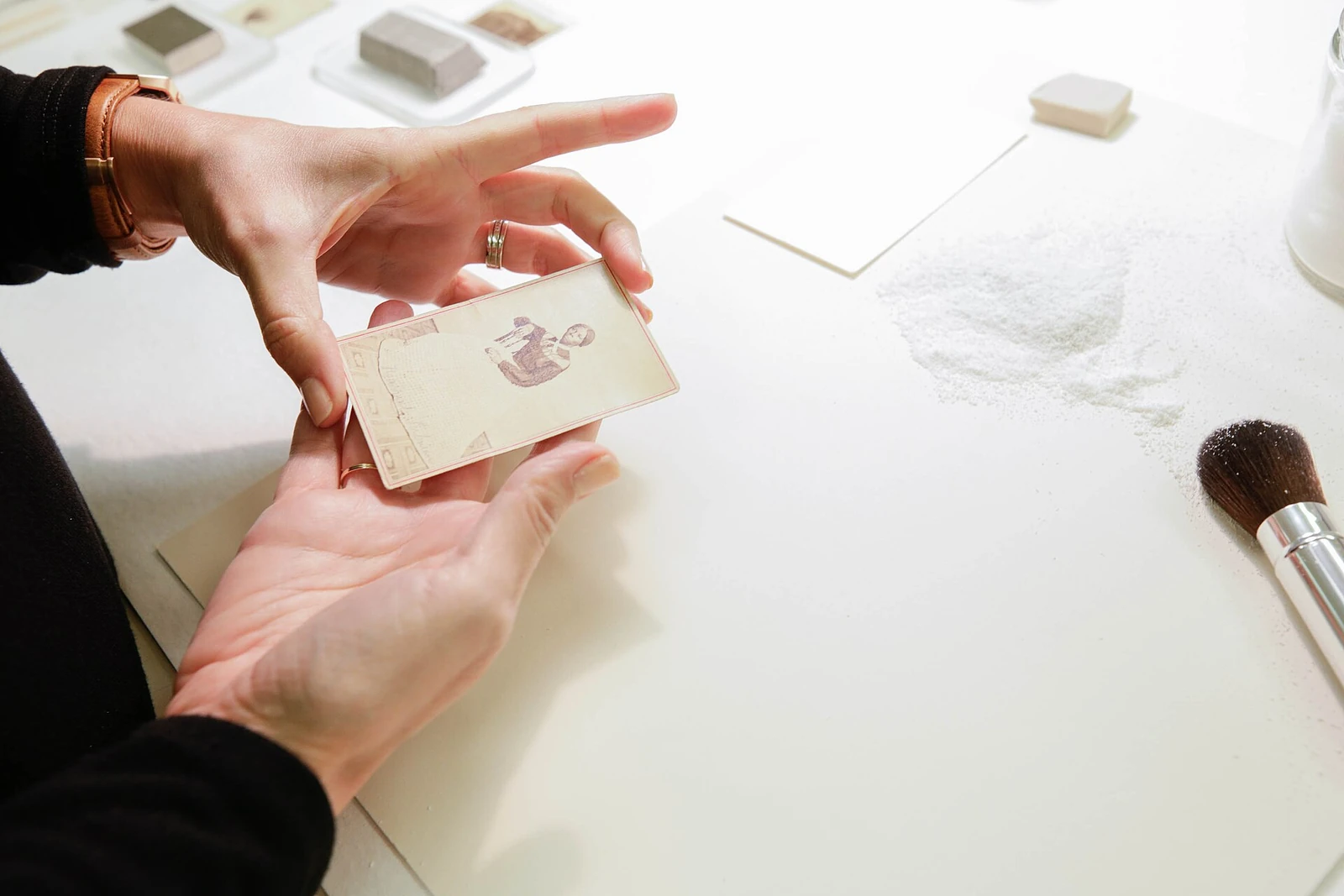
A useful condition note lets another person distinguish what you saw from what you think happened. It does not need to sound like a laboratory report, and it should not diagnose materials from appearance alone. Its first job is to establish an identifiable baseline: which book was examined, when it was seen, which areas were accessible, and what limitations affected the observation. That baseline becomes especially valuable before storage, display, transport, or treatment changes.
Identify the physical item
Record enough information to reconnect the note with the exact volume. A title and author may identify an edition but not a particular copy. Add an existing shelfmark or inventory identifier, volume number where relevant, and distinguishing features that are already visible. Do not write a new identifier directly on a historic cover merely to improve the paperwork. Keep the documentation associated through the collection's established system.
Include the date and the recorder's name or accountable role. State the purpose: an initial household inventory, a proposed exhibition loan, and preparation for digitization ask different questions. The scope matters because a brief external inspection should not later be interpreted as a complete examination. Record areas not examined, including openings that could not be reached safely, rather than leaving the reader to infer completeness from a polished format.
Locate an observation precisely
Descriptions such as damaged spine or loose pages are difficult to compare over time. Identify the component and location, then describe the visible condition. For example, a hypothetical note could say that the front board is detached and lies beside the textblock, or that a tear extends inward from the lower fore-edge of a particular leaf. These examples illustrate wording; they do not report an examined collection item.
Susan Russick's professional documentation prototype separates physical description, changes in condition, testing, proposed treatment, and completed treatment. Its organization helps explain why a condition note should not collapse all these categories into a single sentence. Recording a visible break is one act; attributing its cause or authorizing an adhesive repair is another. The prototype is a historical professional framework, not a claim that its original software remains a current requirement. [1]
Mark uncertainty in the sentence
A dark spot may be a stain, a deposit, or part of the original decoration. Write what can be established without unsafe handling and flag what remains unidentified. Do not label every brown mark mold, every powdering cover red rot, or every detached leaf an original sewing failure. A confident but unsupported term can direct later handling or treatment toward the wrong problem.
Separate reported history from direct observation. If an owner says that a book was stored in a damp basement, attribute that statement. Do not silently convert it into a measured environmental record. If a previous photograph appears to show less damage, note the image date and limits of comparison. Lighting, angle, focus, and scale can make a feature look different without proving that a physical change occurred.
Make photographs answer the written note
Begin with views that identify the volume and orient the reader, then add details of accessible concerns. Keep image filenames or identifiers in the note so that the connection survives a change of folder. A scale can help document size when it can be positioned safely beside the object. Do not place a ruler across fragile media or force an opening to obtain a standardized image.
Record what the photograph cannot show. A closed-book view does not establish the state of the inner joints, and an image of a tear may not reveal whether adjacent media are flaking. Never use image enhancement to create diagnostic certainty. Preserve an unaltered original file and distinguish any annotated or adjusted working copy, particularly when photographs will be compared after transport or treatment.
Link condition to the next task
A condition note becomes practical when it identifies an access consequence. A detached board might require separate support; a projecting foldout might require a larger workspace. Library of Congress digitization guidance explicitly links assessment of condition with suitable equipment, workspace, staff preparation, and possible stabilization. This connection is more useful than a severity adjective without an explanation of how the volume will be handled. [2]
Keep proposed actions separate from completed ones. If you decide to request an enclosure, record it as planned until the enclosure exists and its fit has been checked. If a conservator later treats the volume, associate their report with the baseline rather than rewriting the earlier note as though the problem had never existed. Documentation should preserve the sequence of decisions, including work deferred or declined.
Update without erasing the baseline
On a later review, add a dated comparison stating what was checked and what changed, if anything. Retain earlier images and descriptions, including acknowledged mistakes corrected by later evidence. A concise, dated, traceable record is more dependable than an elaborate form filled with guesses. Its value lies in helping the next custodian act on visible evidence while understanding the limits of the examination.
Sources
References below support the factual explanations in this article. Read each source within its stated scope and context.