
Binding Structures · FIELD NOTE 37
Clasps and Straps: How Fastenings Helped Keep Books Closed
Why did some books use metal clasps, leather straps, or ties?
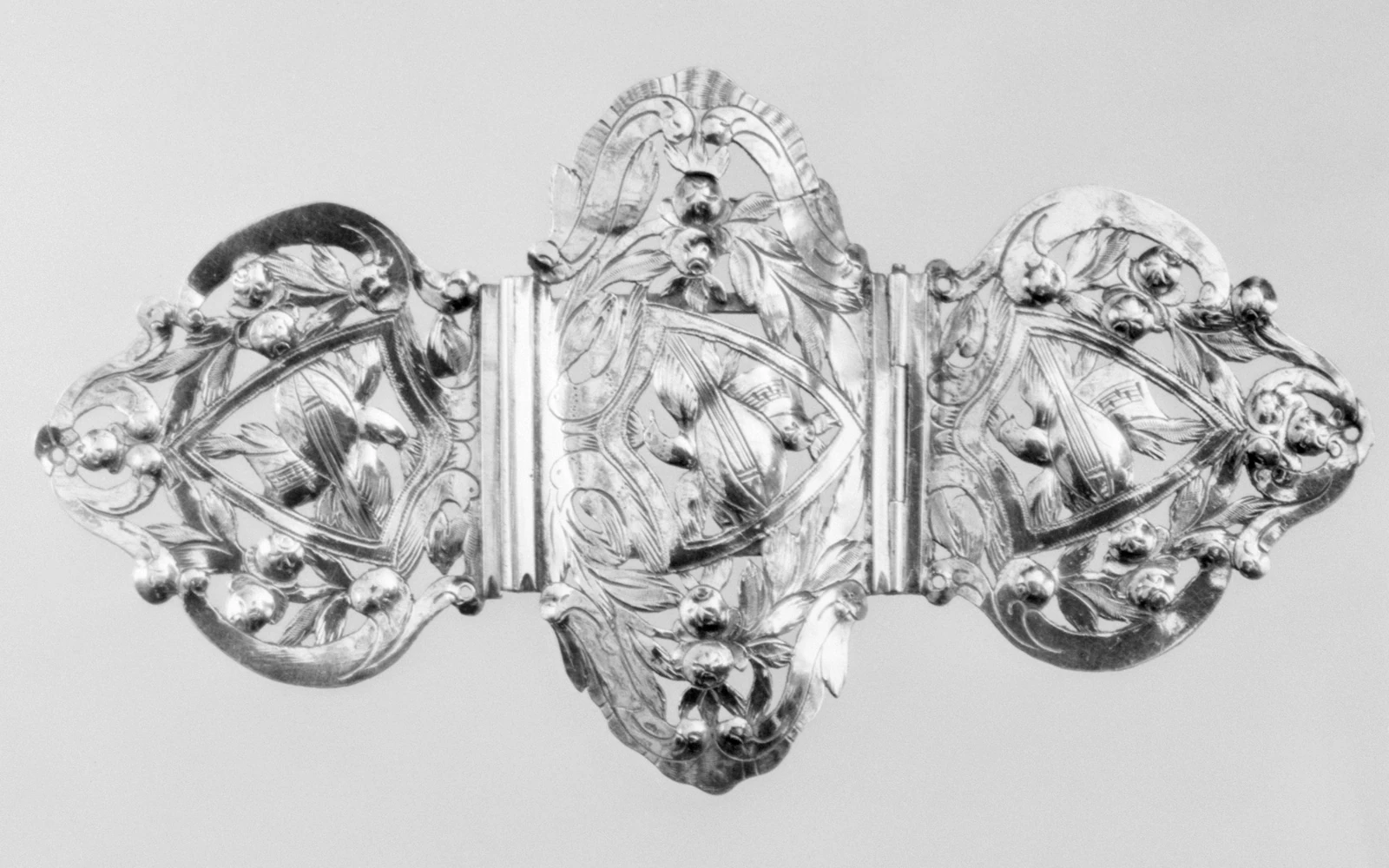
A clasp can look like a small piece of metal attached to an otherwise complete book, but it belongs to the book’s structure. A closure connects the moving covers and helps keep the boards together over the text block. Looking at it carefully can reveal where the book was meant to be secured, how its covers meet, and what later handling has altered. It does not, by itself, identify the exact date, workshop, owner, or reason for a particular design. Those conclusions need evidence beyond a single fitting.
The Library of Congress describes early books that housed vellum leaves with strong wooden covers and leather or metal clasps. In that context, closing the boards was part of the protective arrangement around the pages. The account is useful historical context, rather than a claim that every medieval book had a clasp or that every closure served precisely the same purpose.[1]
Read the closure as a route
Begin with the cover that carries the fixed end. Follow the strap, chain, or metal arm toward the edge where a catch or counterpart would have met it. The route matters: it shows how the fastener crossed the opening and where the closure depended on the board. Look for holes, slots, rivets, plates, or small areas of reinforcement, but record what is visible rather than assuming that each fitting is original.
A surviving part may be incomplete. A strap can be cut short, a catch can be bent, and a counterpart can be missing from the opposite board. An empty hole is evidence of an attachment, but it may not tell you whether the lost part was leather, textile, or metal. A photograph of the full cover, edge, and spine is more helpful than an isolated close-up because it keeps each mark in relation to the book.
Different parts do different work
On a simple closure, the strap provides reach while the catch receives the strap end. A metal plate can distribute the attachment across a broader area of covering or board. Other books have paired fittings or more elaborate hardware. The important distinction is between the visible ornament and the mechanical path: identify where force would travel when the covers were brought together. Do not infer a universal design from one surviving example; fasteners vary with book format, date, place, and use.
The fitting also interacts with the board and covering. If a metal attachment is fixed through a board, the surrounding material may show a small ring of wear or a change in surface tension. A leather strap can leave a different pattern from a rigid metal arm. These observations are clues, not a recipe for reconstructing a missing closure. The board may have been repaired or replaced, and a later repair can shift the position or appearance of the original hardware.
Why some books were closed
Closure should be understood in relation to the object, not as a generic badge of age. The Library of Congress account links wooden covers and clasps in early vellum books to restraint of the pages and keeping the volume shut. That helps explain why a closure may be functional as well as decorative. Yet the source describes a historical pattern; it does not establish that all books with animal-skin leaves needed identical pressure or that every surviving clasp still fits its original boards.[1]
Use can change what a fastener means. A book that once closed for storage may now be kept open for display, or its text block may have been altered by rebinding. A clasp that no longer reaches its catch can reflect a changed cover, a distorted board, or a missing section of strap. The visible mismatch should be documented before anyone attempts adjustment. Pressing the boards together to “see if it works” can turn a useful clue into fresh damage.
Separate hardware from its later image
Closure shapes also moved into book decoration. The Library of Congress’s discussion of Sarah Wyman Whitman describes clasp imagery appearing on later trade cloth bindings as a design motif, even though those books did not necessarily use functioning clasps. A printed or stamped clasp is therefore not proof that a metal closure was once attached. On a cloth cover, distinguish the picture of hardware from actual metal parts, attachment points, and wear around the edges.[2]
This difference is a useful lesson in material reading. A design can quote an older structure and make a cultural reference without reproducing its mechanics. The same caution applies to illustrations, bookplates, and modern facsimiles. Ask whether the feature changes how the covers move, whether it has a physical attachment, and whether its position is consistent with a working closure. If it is only an image, describe it as an image rather than as a surviving clasp.
Make a record before handling
For a collection note, record the location and side of each fitting, its material if that can be identified without testing, and whether any pieces are loose or detached. Include the relationship between the fastener and the board. A useful description might say that a short leather strap remains on the front board and a metal catch is present on the lower edge of the back board. Avoid writing “original” unless a catalogue record or conservation examination supports that conclusion.
Photographs should show the whole cover, the fastening route, and a close view with a scale placed beside the object rather than on a fragile surface. Keep the strap in its resting position. Do not pull, bend, polish, or attempt to close a stiff fitting. These actions change the evidence and may crack a covering or loosen a rivet. If the volume is being studied in a library, follow the reading-room staff’s instructions for supports and photography.
When restraint is the right care
A bent clasp or brittle strap does not automatically need to be made functional again. If a fastening is stiff, corroded, detached, or pulling against the board, leave it where it rests and support the volume in a way that does not put the fitting under tension. An enclosure can protect projecting metal from knocks, but the enclosure must fit without pressing the hardware. A conservator can assess whether stabilization is appropriate for the particular materials and use.
This is especially important when hardware is associated with a significant binding or when the book has fragile pages, active corrosion, or old repairs. Cleaning a fitting can remove surface evidence and may introduce abrasive particles. Lubricants and household metal polishes are not neutral preservation treatments. The appropriate course depends on the metal, adjacent leather or parchment, previous treatment, and the object’s intended access. A short written condition note is a safer first step than a repair attempt.
What a clasp can and cannot tell you
A closure can show that the book was designed to be secured, and its position can help explain the relationship between cover boards and text block. It may also preserve traces of how the object was handled. It cannot alone prove an exact date, a specific binding shop, or the identity of an owner. Those questions require comparison with catalogues, provenance marks, construction evidence, and other records.
The most reliable reading stays close to the evidence: identify the material and attachment points, describe what is missing, and explain the limits of the observation. A clasp is both a small mechanism and a historical trace. Looking at its route without forcing it keeps those two roles visible while leaving the book ready for the next reader.
Sources
References below support the factual explanations in this article. Read each source within its stated scope and context.