
Archive Visits · FIELD NOTE 48
Bookplates and Ownership Marks: Tracing a Book’s Provenance
What can a bookplate reveal, and what can it not prove?
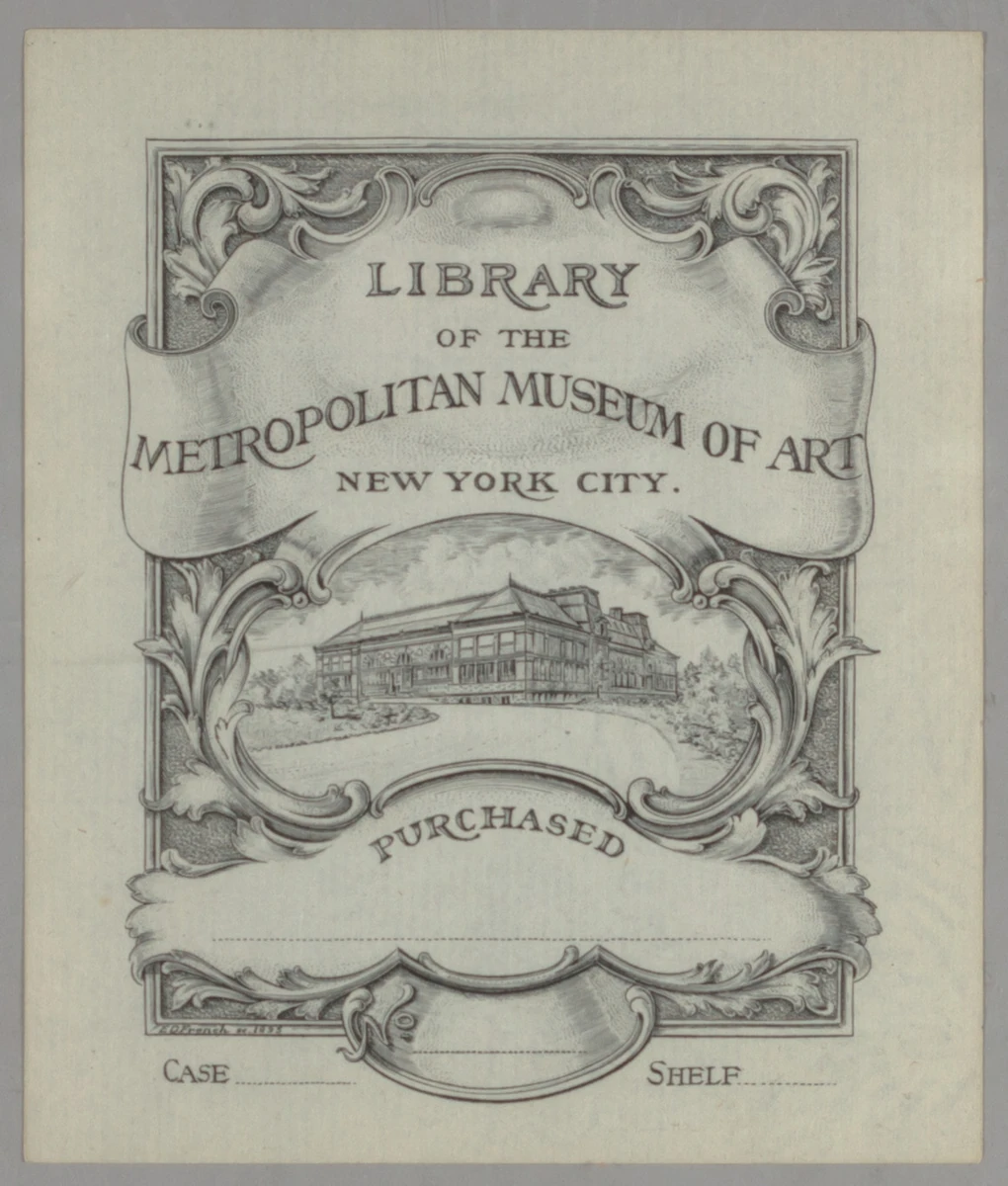
A bookplate is a label or printed design placed in a book, often to identify an owner or collection. It may include a name, coat of arms, motto, image, or library mark. Ownership evidence can also appear as a handwritten inscription, stamp, shelf mark, ticket, or note. The Library of Congress describes historical bookplates as an important source for provenance research, but an ownership mark is a clue to investigate rather than a complete history of the volume.[1]
Provenance is the record of ownership and custody through time. A single bookplate may identify one person or institution without showing when the book was acquired, how long it was kept, or who owned it before or after. The mark becomes more useful when it is considered alongside catalogue records, inscriptions, binding evidence, sale documentation, and other sources.
Read the mark in place
Before transcribing a bookplate, record where it appears: front pastedown, flyleaf, title page, or another location. Note whether it is printed, handwritten, stamped, or attached as a separate label. Describe its condition and whether any part is obscured or cut off. Placement may matter because a plate moved during rebinding or pasted onto a replacement endpaper has a different relationship to the book than a label on an original board.
Do not peel up a corner to inspect the adhesive or remove the plate from the book. A loose edge may be fragile, and the paper underneath can carry other marks. Photograph it in place with even light, include the surrounding page, and transcribe visible text exactly before adding interpretation. Use brackets for supplied letters or uncertain readings so later readers can see which parts are direct observation.
Names need corroboration
A name on a bookplate may belong to an owner, but it could also identify a donor, previous collection, or a later custodian. A family name may be shared by several people. A heraldic device or initials can be suggestive without being unique. Search catalogues and authority records, then compare dates, place, and other marks. Do not treat a plausible match as confirmed provenance until independent evidence supports it.
The International League of Antiquarian Booksellers’ provenance checklist recommends bringing together multiple kinds of evidence and recognizing that provenance marks may be missing. A gap in the chain does not make the book’s history unknowable, but it should be stated honestly. A record can say “bookplate of a person with this name” when identity has not been established, rather than assigning the volume to a famous collector on visual resemblance alone.[2]
Marks can overlap
A book may carry several ownership marks accumulated over generations. One owner may have placed a bookplate over another, a library may have added a stamp, and a bookseller may have written a price or catalogue code. Marginal notes and shelf marks can add context. Each mark should be recorded separately before attempting to arrange them in chronological order.
Overlapping evidence can be difficult to interpret. A stamp may cover part of an inscription, or a plate may have been transferred from another copy. Compare paper, printing, ink, and placement where possible, while recognizing that visual comparison has limits. A conservator or rare-book cataloguer may help assess whether a mark is integral, added later, or associated with a repair.
Provenance and book history
Ownership marks can connect books to readers, libraries, schools, families, and historical collections. They may help trace how works circulated or identify an item in a catalogue or estate record. They can also preserve evidence of how an owner presented a personal library. These insights are strongest when a mark is linked to reliable records rather than treated as a self-contained biography.
Not every reader marked a book, and not every mark survives. The absence of a plate does not prove that a book had no owner or spent its life in one collection. A plate can also be separated from context when a book is rebound. Provenance research should make room for gaps and competing possibilities rather than constructing a continuous story from fragments.
Preserve the evidence
Use a pencil only if the holding institution permits it, and never write on the bookplate itself. Do not add a new permanent ownership mark over historic writing or decoration. The Library of Congress cautions that permanent marks should not obscure information or significant design features. For personal books, label a removable enclosure or maintain a separate catalogue record instead of altering the object.[1]
Photographs and transcriptions should include collection identifiers and access dates. Record the exact location and dimensions of a plate if the information is relevant to research. Keep digital files with stable names and link them to the catalogue record. This documentation makes the evidence usable while leaving the original mark undisturbed.
Digital research can widen the comparison
Institutional catalogues, digitized collections, auction catalogues, and published checklists can help compare a mark against other examples. Search variations in spelling and initials, and keep a list of the records consulted. A search result is not proof of identity: records can contain errors, copied descriptions, or incomplete images. Prefer institutional catalogues and primary documents when a claim depends on ownership or date.
When a possible match is found, state what connects the person to the book. Is there a documented sale, a matching inscription, a family inventory, or only a similar design? The strength of the conclusion should reflect the strength of the evidence. A concise provenance note with links is more useful than a dramatic narrative that cannot be checked.
When to seek specialist help
Ask a rare-book librarian or provenance researcher when a mark is difficult to read, appears to identify a notable owner, or affects the catalogue description. Seek a conservator if the bookplate is detaching, brittle, stained, or attached over important text. A specialist can examine the mark in relation to the binding and page structure without risking unnecessary removal.
Until then, keep the book supported and avoid rubbing, humidifying, or lifting the plate. A protective enclosure can reduce abrasion, but do not allow it to catch on a projecting label. If the item is being consulted in a reading room, follow the institution’s instructions about photography and handling.
A source-led provenance note
A well-formed note reports the mark’s visible content and location, cites the institutional guide or catalogue used, and separates identification from inference. For example, it can state that a plate bears a named collection and that a catalogue suggests a possible match, while leaving the owner unconfirmed. This clarity helps readers understand both what is known and what remains open.
Bookplates are small objects with potentially rich histories. The Library of Congress recognizes their value as provenance evidence, while the ILAB checklist underscores the need for corroboration. By preserving the marks in place and documenting the research trail, readers can build a reliable account without turning a single label into more proof than it can provide.
Sources
References below support the factual explanations in this article. Read each source within its stated scope and context.