
Binding Structures · FIELD NOTE 05
The Pamphlet Stitch as a Compact Binding Structure
When is a simple sewn booklet structurally appropriate?
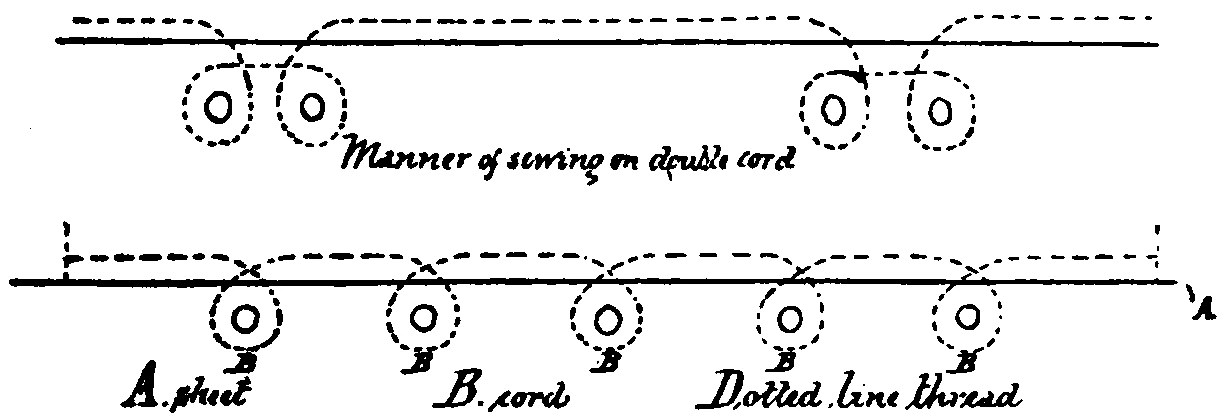
A pamphlet stitch answers a small, specific construction problem: how to keep one folded gathering together without building a complex spine. It is useful for a short handmade booklet because the sewing can pass directly through the central fold. The simplicity is also its limit. Before choosing the stitch, ask what the booklet contains, how thick the folded stack becomes, and whether users need it to remain easy to open. A neat thread pattern cannot compensate for an unsuitable format.
One gathering is the starting point
Make a distinction between several sheets nested together and several separately folded gatherings stacked together. The first arrangement has one central fold through which the whole unit can be sewn. The second has multiple folds that require relationships between separate units. Counting all of their pages as one thick pamphlet conceals the structural difference. A method intended for one gathering should not be expanded indefinitely merely because a longer needle can reach through the material.
Dartmouth's manual demonstrates sewing a single-signature pamphlet, including planning holes and a route through the central fold. Read that procedure in its stated setting: an institutional repair manual, not an instruction to pierce any historic booklet. For a new project, use the method as a construction reference. For an existing object, first determine whether its current sewing, original covers, and condition should be retained rather than replaced with a familiar workshop pattern. [1]
A paper dummy answers the format question
Before sewing important content, fold an expendable set of the proposed stock. Keep the intended page count and cover material. Check whether the closed stack sits comfortably and whether its inner leaves project beyond the outer ones. This is a proposed planning exercise rather than a measured test. It reveals a practical consequence of nesting: the final trim and the available margins need to be considered with the assembled fold, not just with a flat page design.
Number the dummy after folding, then unfold it and inspect the order. This separates two decisions that beginners sometimes combine too soon: imposition, which determines where content belongs on the sheet, and sewing, which retains the folded unit. Discovering a misplaced page after piercing is avoidable. For a short event booklet, a proof showing pagination and gutter space may contribute more to a successful result than a decorative cover chosen before the page arrangement is settled.
Hole placement is a layout decision
A sewing station occupies space in the fold and determines where thread contacts the paper. Place the intended stations on a separate template for the new booklet, using a clearly marked head and tail. The template should remain the same orientation each time it is transferred. Rather than copying arbitrary spacing from a different-sized model, check that the chosen arrangement belongs to the current height and leaves adequate paper around each station.
For the actual sewing sequence, follow one complete, appropriate instruction rather than combining remembered fragments from several methods. Support the fold while making holes, keep hands clear of the point, and use a stable work surface. If a station tears or a thread pass requires force, pause and examine the dummy. Continuing to tighten a damaged fold can turn a small mistake into the main weakness of the finished booklet.
Tension should retain, not compress
The purpose of the stitch is to keep the sheets associated during normal opening. It is not to pull the spine into a narrow, rigid cord. On a practice model, look for a fold that remains aligned without puckering and pages that turn without the thread sawing along the station. A knot's appearance is less important than the surrounding paper. If the paper is already torn, additional tension does not restore what was lost.
Randy Silverman's study of conservation pamphlet structures is useful because it treats thin material as a distinct problem. He discusses why attachments and adhesive linings that suit other bindings can restrict a pamphlet or load its endpaper hinge. The lesson is not that every pamphlet needs his exact construction. It is that a thin booklet deserves a structure designed around its own movement, rather than a miniature version of a heavy hardback. [2]
A cover can protect without overpowering
Compare a flexible cover on the dummy with a much stiffer proposed cover. Ask where the first leaf bends and whether the cover demands a wider opening than the paper permits. A simple sewn wrapper may be enough for an ephemeral booklet; an important collection pamphlet may instead need a protective housing selected by a conservator. These are different purposes. The wish for a visible spine title should not automatically determine the treatment of a fragile original.
Added pockets, tipped-in photographs, or folded inserts change the closing thickness and the way leaves move. Plan them before deciding that the original dummy is adequate. If the contents keep expanding, dividing the project into smaller booklets can be more coherent than thickening one fold beyond its comfortable use. This is an editorial and construction decision together: the unit of reading should suit the unit of binding.
A successful pamphlet stitch is defined by proportion. One gathering, an appropriate cover, considered stations, and controlled tension produce a readable small object. Its value lies in doing a limited job clearly. When the material requires multiple independent sections, when fragile originals need treatment, or when additions make the fold unwieldy, choose a different plan instead of asking the simplest stitch to solve every bookbinding problem.
Sources
References below support the factual explanations in this article. Read each source within its stated scope and context.