
Archive Visits · FIELD NOTE 33
Book Cradles for Digitization and Study
Why are fragile books photographed in cradles?
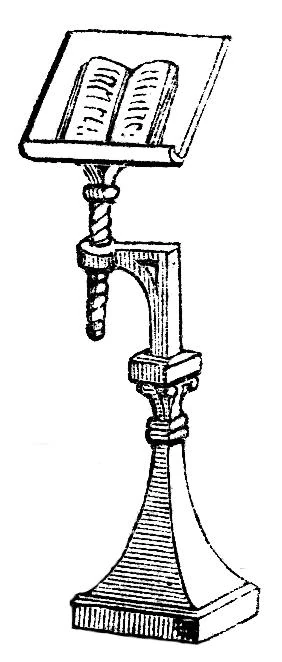
A book cradle should solve a particular support problem. Its presence beside a camera is not evidence that a volume can be opened safely, and its angle is not a target every binding should reach. The useful question is whether the arrangement carries the book throughout the intended task: initial positioning, page turning, imaging, and removal. A support that works for one opening may need adjustment a few leaves later.
Start with what the book permits
Examine the closed volume on a prepared surface before arranging the camera. Note detached components, protruding inserts, and places where the cover or textblock already lacks support. Open only as far as the structure permits without force. A restricted opening can be meaningful evidence about construction or condition; it is not an obstacle that the imaging setup is entitled to overcome.
Library of Congress digitization guidance places condition assessment, equipment selection, and staff training within the same planning process. It also asks whether temporary support can reduce the need for treatment. This is a useful order of operations: identify the object and the task, then choose the equipment. Selecting a scanner first can create pressure to make an unsuitable book fit a fixed workflow. [1]
Support both sides independently
As pages move from right to left, the thickness beneath each side changes. A cradle with adjustable supports can accommodate this difference, provided the operator actually reassesses the position. The goal is stable contact beneath the relevant parts of the volume, without making the spine carry unsupported weight. A symmetrical arrangement that looks tidy in a photograph may be inappropriate for an asymmetrical opening.
Consider a hypothetical notebook being photographed near its beginning. Most leaves remain on the right, so equal-height supports may not suit both sides. Near the end, the imbalance reverses. This simple comparison explains why a single setup photograph cannot document the safety of an entire imaging session. Record any adjustments that later operators will need to reproduce, together with the limits that caused them.
Leave room for the spine to behave
Books have different spine structures, and their movement cannot be reduced to one universal cradle profile. Observe whether opening changes the position of the spine and whether the chosen support obstructs that movement. Do not push an existing distortion against a rigid shape merely to create a level page. A cradle provides an accommodation for the object; it should not become an unplanned reshaping device.
The Library of Congress defines a book cradle as a device supporting an open book to protect its spine and binding. That definition does not prescribe a universally safe opening angle. If a binding resists, a cover lifts unexpectedly, or a leaf begins to tear, pause and reassess. An expensive commercial support cannot remove the need for judgment about the particular volume. [2]
Move the camera before forcing the page
An overhead camera can be repositioned to suit a restricted opening, subject to the equipment's capabilities. That option should be considered before applying pressure near the gutter. A photograph with some curvature may preserve more useful evidence than a flatter image obtained through damaging manipulation. Decide which details must be legible and whether another view can record areas that the first exposure misses.
Do not treat weights, fingers, or glazing as automatic solutions to page movement. Anything placed on a leaf adds contact and may conceal evidence or stress fragile media. If a page cannot remain accessible without an uncertain restraint, seek an appropriate supervised method or defer that image. Record the omission explicitly so a later user does not mistake a missing image for a missing original page.
Give foldouts their own workspace
A map or plate extending beyond the textblock changes the required support area. The book cradle may carry the binding while leaving the unfolded attachment suspended. Before opening it, identify where the extension would land and whether its folds and attachment can tolerate the movement. The Library of Congress requires digitization equipment to accommodate oversized material, including foldouts, rather than forcing it onto an undersized bed. [1]
For an ordinary study session, the same reasoning applies without a camera. Clear enough space for the support and the reader's notes, keep equipment cables away from the object, and decide where a loose insert can remain associated with its opening. Do not repeatedly lift the volume to retrieve something trapped beneath it. Workspace layout is part of the support system, even though it is not sold as conservation equipment.
End with a repeatable handling note
A useful note identifies the volume, the support arrangement, the openings consulted, and any observed restriction. Distinguish observations from interpretations: a joint that opens visibly is an observation; a diagnosis of adhesive failure requires further evidence. If access was stopped, explain what prompted that decision. This gives the next reader a practical starting point while avoiding a false guarantee that yesterday's successful handling makes every future opening safe.
Keep the handling note with the imaging instructions, so the person operating the camera can find it before the book arrives on the table.
Sources
References below support the factual explanations in this article. Read each source within its stated scope and context.