
Paper and Grain · FIELD NOTE 40
Parchment and Vellum: Animal-Skin Supports for Books and Documents
What are parchment and vellum, and how should readers describe them?
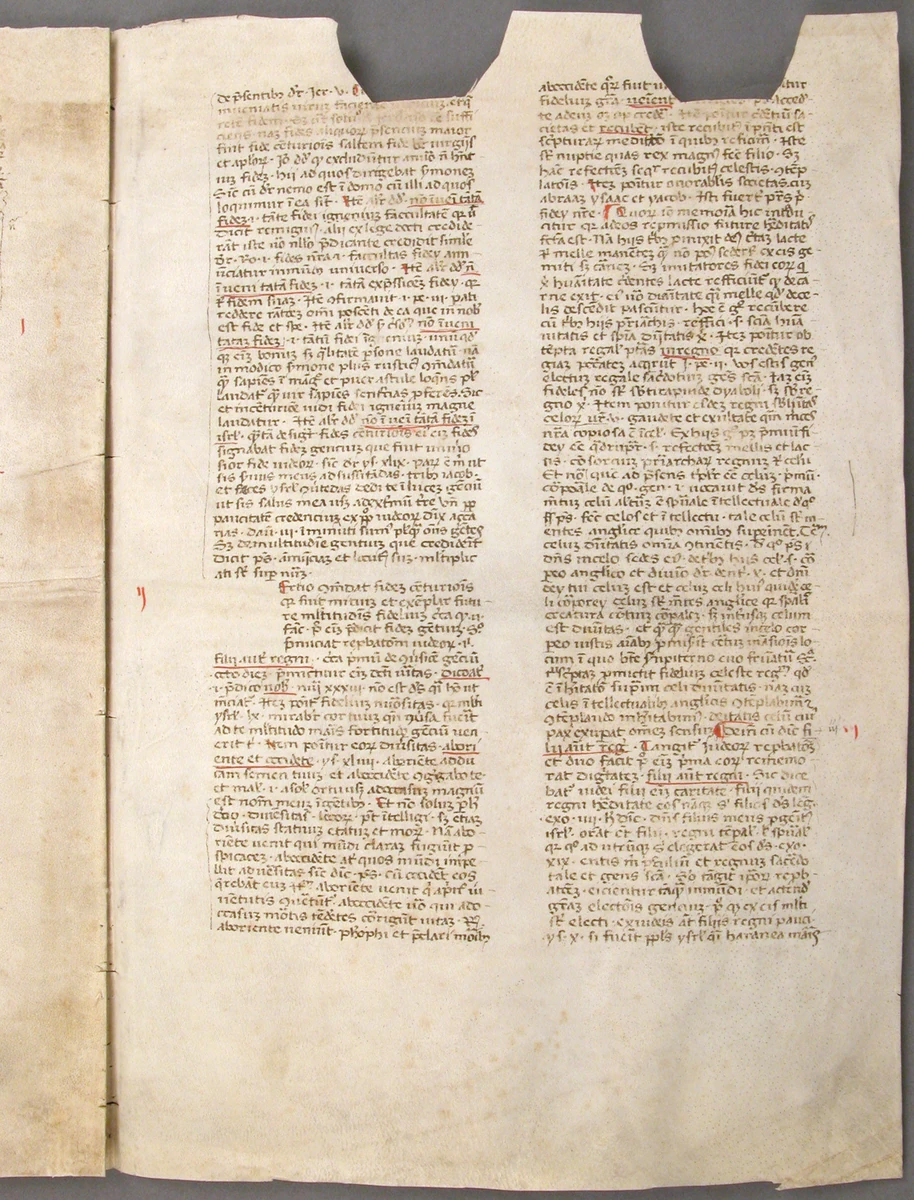
Parchment is an animal-skin material prepared for writing or printing. Vellum is often used as a synonym, but the terms have also carried narrower meanings. The U.S. National Archives describes parchment as a general term for prepared skin, commonly from calf, goat, or sheep, and notes that vellum has historically referred to calfskin parchment. The Library of Congress says the terms are often used interchangeably in collections and explains that the production traditions and animal sources can differ. A careful description should name its source and explain its terminology.[1][2]
These materials appear in manuscripts, bindings, maps, deeds, and other records. They are not paper, even when a sheet has been made thin and smooth enough to resemble it. Identifying the support matters because skin behaves differently from cellulose paper, particularly when moisture and relative humidity change. Appearance can suggest a material, but it cannot always establish what animal was used or how the skin was processed.
How a skin becomes a writing support
The National Archives describes a preparation process in which the skin is cleaned, stretched on a frame, scraped, and repeatedly wetted and dried to reach a desired thickness and tension. A finishing stage may use pumice and chalk to prepare the surface for ink. This account helps readers understand why a sheet can carry areas of differing thickness or surface character. It does not mean every historic workshop used an identical sequence or materials.[1]
Because parchment begins as a whole skin, a finished sheet may preserve variations that do not occur in the same way in a papermaking mould sheet. Shape, thickness, translucency, and surface can vary across an object. A manuscript leaf might also have been trimmed, folded, written on both sides, or reused. These visible features can guide an examination, but do not use touch, scraping, or wetting to test a suspected material.
Terminology needs a date and a source
“Vellum” is not used identically in every catalogue or field. The National Archives presents the calfskin distinction as a useful definition. The Library of Congress, meanwhile, notes that parchment and vellum are frequently used interchangeably and uses “vellum” in a particular research project about book structures. In historical descriptions, local and period usage can differ. When reproducing a catalogue title, preserve its wording; when writing your own description, state the convention you are following.
This caution prevents a common mistake: claiming animal species from a cream-colored surface. Color and texture are influenced by preparation, age, illumination, dirt, and later treatment. Even a specialist may need examination or scientific analysis to answer a material question confidently. If the species is not documented, “parchment” or “animal-skin support” is usually more defensible than a precise identification.
Why humidity changes matter
The Library of Congress describes parchment or vellum as highly hygroscopic: it responds strongly to water vapor in the surrounding air. It reports that changes in relative humidity can cause deformation, and gives examples of skin shrinking, breaking, or warping when conditions become too dry. Wide fluctuations can produce dimensional changes in vellum bindings. For a reader or caretaker, the practical lesson is to avoid sudden environmental changes and to seek collection-specific guidance rather than chasing an isolated target number.[2]
Paper and parchment do not necessarily have the same environmental preferences. The Library of Congress notes that conditions considered suitable for long-term paper storage may be too dry for some vellum materials. That is a reason collections require balanced decisions across mixed materials, not a universal instruction to raise humidity at home. Dampening a distorted sheet or placing it in a bathroom is not a safe corrective method; moisture can make deformation worse and affect ink, adhesives, and neighboring paper.
Observe surface and structure gently
Look for areas of translucency, surface abrasion, cockling, tears, old repairs, and differences between the written and unwritten sides. On a bound volume, inspect how the skin relates to boards, sewing, and spine linings. Record whether the cover is flexible or supported by boards, but do not infer its full original construction from a single surviving layer. A later rebinding may combine older parchment with newer paper, thread, or adhesive.
Use even light and support the sheet or book so it does not hang from a weak edge. If transmitted light is available in a reading room, ask staff before using it; direct handling or lifting can stress a brittle leaf. Avoid folding the material to determine its grain or suppleness. A high-resolution photograph may help compare surface patterns, but it does not replace examination when a treatment decision depends on material condition.
Writing, ink, and the skin surface
A prepared skin surface can receive ink, but the interaction depends on preparation, media, and condition. The National Archives notes that surface finishing can help prepare parchment for writing. That does not imply that every mark can safely be cleaned or retouched. Ink may be fragile, and pigments or later additions may react differently from the support. If writing is flaking, powdering, or transferred to another surface, stop handling and consult a paper or book conservator.
Do not conduct an absorbency test with a drop of water, swab, solvent, or adhesive. Such tests are interventions, not neutral ways to identify the material. A conservator considers the entire object, including inks, seals, attachments, and previous repairs. For routine access, turning leaves slowly with clean, dry hands according to reading-room rules is safer than wearing gloves by default; institutions may set different handling requirements for specific materials.
Distinguish observation from treatment
For a basic condition record, describe the support as the catalogue identifies it, then note visible changes: distortion, tears, abrasion, staining, or detached attachments. Add where each feature occurs and whether it appears stable over time. Do not write that humidity “caused” a distortion unless records support that explanation. The material’s response to the environment is well documented, but the history of an individual object may be unknown.
Skin supports can be structurally resilient in some ways and vulnerable in others. Their history of use in important records does not mean they are indestructible. A fragile document should remain supported, enclosed appropriately, and away from rapid environmental changes. If it is valuable, heavily distorted, or contains unstable media, contact a conservator rather than attempting to flatten or humidify it.
Read the sheet as a material record
Parchment and vellum connect an object to animal skin preparation, writing practice, book structure, and storage history. Their terminology requires care, and their environmental response makes preventive decisions important. Library and archival descriptions offer a starting point, while close observation adds information about a particular leaf or cover.
The strongest description is specific but modest: identify the source of the terminology, distinguish the support from paper, record visible condition, and leave uncertain claims open. That approach preserves useful evidence without asking the object to prove more than it can. It also gives a conservator a clear account of what has been observed and what remains unknown.
Sources
References below support the factual explanations in this article. Read each source within its stated scope and context.