
Conservation Notes · FIELD NOTE 29
A Detached Cover Is a Structural Question
Should I glue a detached book cover back on?
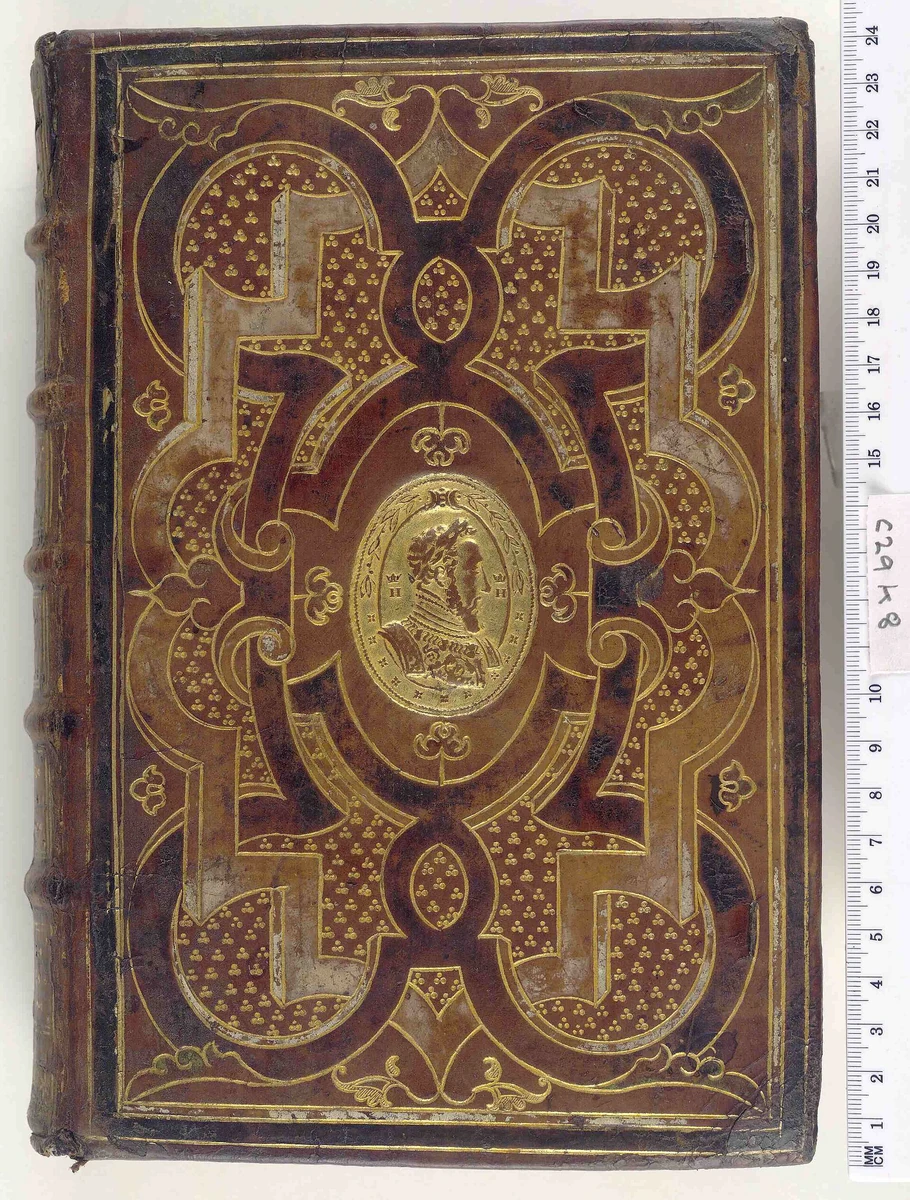
When a cover comes away from a book, the exposed separation can seem to identify its own repair: put glue where the parts used to meet. Yet a detached board, a complete loose case, and a detached spine covering are different failures. They may involve intact sewing, damaged endpapers, broken supports, or previous repairs. The first useful action is to preserve the relationship between parts and stop repeated movement. The visible gap is evidence to interpret, not automatically a place to fill.
Identify what has separated
Describe the component in ordinary positional language. Is one board detached while the spine covering remains? Has the complete cover assembly separated from a grouped text block? Are individual leaves also loose? These observations matter more initially than applying a general label such as broken binding. Keep the text, cover, and fragments associated in suitable temporary support, without forcing them back into a position that conceals the break.
The National Archives recommends preservation-quality boxes partly because they can keep detached covers and damaged-binding pieces together. That is a concrete benefit before any repair is chosen. Housing does not restore attachment, but it can prevent a loose component from becoming separated from its evidence. A labelled group of parts is more useful to an examiner than a tidied book whose apparently unimportant scraps were discarded during an improvised repair. [1]
Separate the failure from its presumed cause
A split at the inner cover edge does not prove that a particular adhesive failed. Paper, cloth, leather, sewing, and other attachments can be involved. Describe what is visible and state when it was noticed. If the book was already detached when found, do not attribute the break to the person who first opened it. A condition record should distinguish an observed separation from an account of how that separation supposedly occurred.
Photograph the assembled relationship only if it can be done without shifting unsupported parts. Include an overall view and a contextual view of the separation. Do not peel back additional layers to make the mechanism easier to photograph. The boundary of the present damage is itself useful evidence. Enlarging it in search of a complete explanation may remove options that a conservator would otherwise have retained.
Attachment depends on construction
In a familiar adhesive-case binding, cover and text form assemblies joined through specific connections. Other bindings attach boards or covers differently. A repair copied from a circulating hardback may therefore be inappropriate for an older sewn structure even when both have a loose front board. Material resemblance does not establish mechanical equivalence. Before treatment, the particular attachment and the significance of surviving components need to be understood.
The Canadian Conservation Institute's Salzinnes Antiphonal treatment documents several coordinated attachment elements, including sewing-support extensions, linings, endpapers, and board connections. This is a specific professional treatment with evidence-based choices, not a household repair sequence. It illustrates why simply adding adhesive at the most visible gap can miss the relationship that actually needs attention. An attractive outer result is not the same as a restored attachment system. [2]
Immediate access may not require immediate repair
Ask what is needed from the book now. If the text exists in another edition or a reliable scan, that copy may meet the reading need while the original waits for assessment. If an inscription or unique annotation must be consulted, arrange supported access appropriate to the condition. Do not let an approaching event or photograph deadline turn a treatment question into a hurried glue purchase. The urgency of access and the urgency of repair can differ.
For a family collection, explain the limitation to anyone likely to handle the volume. A note should identify the loose component and any required support, not merely call the book fragile. Keep the note with the housing rather than attaching a new label to an original surface. This reduces the chance that another reader discovers the separation by lifting the board as though it still carried the text.
Tape creates another attachment to assess
The Library of Congress advises against self-stick tape on damaged books, including products marketed as archival. Its FAQ discusses housing and professional help in relation to condition and value. A new strip can bridge the visible crack while introducing a different adhesive and obscuring the previous edge. The temporary appearance of security is not a sufficient reason to add a material that may complicate later examination and treatment. [3]
Do not remove an earlier repair simply because it appears unsightly. Its adhesive, carrier, and neighboring paper may now behave differently from when it was applied. Record its presence and let the treatment assessment consider whether removal is necessary or safe. Trying several successive fixes can leave a book with more interventions and less clear evidence than the original detachment presented.
Bring a decision question to the conservator
Describe the intended use, what is unique about the object, any known earlier treatment, and the present movement limitation. Ask which options meet that need: housing alone, limited stabilization, repair, or more extensive work. Request clarity about visible changes and remaining restrictions. A treatment can be successful without returning a historic book to unrestricted handling, and that expectation should be established before work begins.
A detached cover makes a book's construction visible at a vulnerable moment. Preserve that evidence, distinguish the separated components, and choose an access plan that does not enlarge the failure. The eventual repair should follow an understanding of the attachment rather than precede it. Keeping parts associated and questions precise is already useful care, even before anyone has decided whether an adhesive belongs in the solution.
Sources
References below support the factual explanations in this article. Read each source within its stated scope and context.