
Conservation Notes · FIELD NOTE 31
Mold on Books: Recognize the Limit of DIY Care
What is the safe first response to suspected mold?
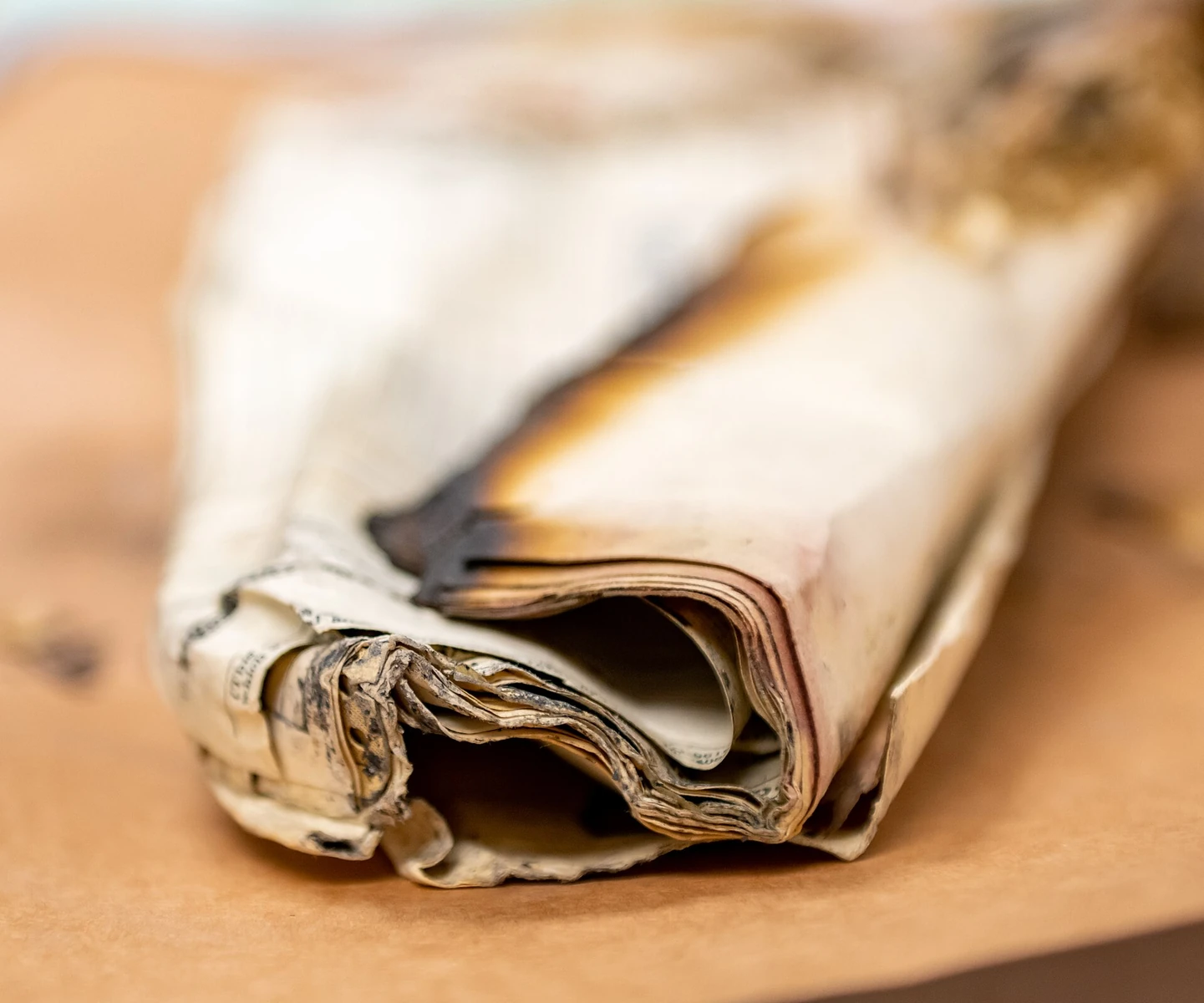
A fuzzy patch on a book changes the immediate question. The first priority is no longer how to improve the cover's appearance, but how to avoid spreading contamination and exposing people while the situation is assessed. A general guide cannot identify a species, establish whether an item is safe, or prescribe treatment from a photograph. It can help you stop an ordinary reading session, recognize limits, and gather useful information without turning a suspected mold problem into a cleaning experiment.
Stop the activity that brought the patch to view
If you notice suspected mold while shelving, photographing, or unpacking, stop unnecessary handling. Do not rub the patch to see whether it comes off, smell it closely, or fan the leaves for a clearer picture. In a library, notify the designated collections or facilities contact before moving the item through shared spaces. At home, keep other people away from the immediate activity and seek appropriate professional guidance about safe isolation and the surrounding environment.
The Library of Congress distinguishes dry, powdery dormant mold from active growth that may look fuzzy or slimy, while emphasizing precautions for both. Those descriptions are warning signs, not a dependable home identification test. A dry appearance does not establish that the material is harmless, and you should not disturb it to decide which category it fits. The library specifically advises against disturbing active mold. [1]
Separate three decisions
A useful triage conversation has three parts: human exposure, the condition of the building or storage area, and the value and replaceability of the affected object. These questions require different kinds of help. A conservator assesses collection treatment; a building professional may investigate a leak or damp enclosure; personal symptoms or exposure concerns belong with qualified health advice. A book-care article should not substitute one specialist's role for another or imply that preserving an object takes priority over people.
The National Archives links mold problems with unfavorable storage conditions and advises isolating affected materials from other records. It also warns that ordinary vacuum cleaners can recirculate contamination. This explains why moving a book to another shelf or brushing it over a household bin is not a complete response. The original location and the handling route need attention as well as the item itself. [2]
Avoid the universal bagging rule
Advice to put every suspect book into a sealed bag misses an important distinction: whether the material is still wet. A sealed enclosure can restrict air movement and retain moisture. The Library of Congress's guidance describes drying before later isolation for certain irreplaceable items; emergency procedures depend on circumstances and require appropriate safety controls. Do not treat a short instruction copied from one stage of that process as a complete household method. [1]
When asking for help, report whether the book was recently wet, whether several objects are affected, and whether a leak or persistent dampness is present. If safe documentation is possible without disturbing the material, a distant contextual image may be enough initially. Do not enter an unsafe room or reopen a wrapped item merely to obtain better photographs. Describe what you already know and let the appropriate professional determine the next inspection step.
Cleaning advice has a setting
Professional mold treatment may involve containment, controlled extraction, protective equipment, and trained assessment. A photograph of a technician using a vacuum is therefore not evidence that a domestic vacuum is suitable. The Library of Congress's account of its own mold work describes a conservation setting and specialized precautions. Borrowing the visible tool while leaving out that setting produces a misleading version of the procedure, even if the intention is careful cleaning. [3]
Likewise, neither spraying a cover nor placing it in strong sunlight is a universally safe remedy. Introducing a product changes the materials and may affect future treatment, while light can alter inks and coverings. This article does not supply a substitute disinfectant recipe. Until an appropriate response is established, reducing avoidable disturbance is more useful than trying several remedies and discovering afterward which one caused staining, distortion, or wider dispersal.
Replacement can be a preservation decision
An ordinary, replaceable reading copy and a unique annotated family volume do not necessarily warrant the same treatment investment. The Library of Congress notes that stabilization and cleaning can cost more than replacing an affected item. That comparison should concern safe access to the information and the significance of the physical object, not shame about discarding a book or a promise that every damaged volume can be made usable again. [1]
Consider a hypothetical classroom paperback and a handwritten diary found in the same damp box. A readily obtainable replacement may meet the paperback's reading purpose; the diary's unique content and physical evidence require another conversation. This is an example of triage reasoning, not an appraisal or a disposal instruction. Ownership, institutional rules, documentation, and professional advice still determine what can be removed, retained, or treated in a specific collection.
Before the book returns to use, the conditions that supported the problem must also be addressed. A superficially cleaner cover does not demonstrate a safer room or a completed treatment. Ask what caused the dampness, what remains uncertain, and who has cleared the item and storage area for their intended use. The sound first response is a coordinated pause: protect people, avoid dispersal, obtain appropriate assessment, and decide what access is realistically possible.
Sources
References below support the factual explanations in this article. Read each source within its stated scope and context.