
Conservation Notes · FIELD NOTE 46
Integrated Pest Management for Book and Paper Collections
What does integrated pest management look like in a library or archive?
Integrated pest management, usually shortened to IPM, is a preventive way to manage insects and other pests around collections. It combines observation, building maintenance, housekeeping, monitoring, and targeted response. For books, the goal is not to spray every shelf or to treat every insect sighting as an emergency. It is to understand how pests enter, what conditions support them, and whether there is evidence that collection material is being affected.
The Northeast Document Conservation Center describes IPM as a coordinated approach that emphasizes prevention and monitoring in libraries and archives. Its guidance identifies building conditions, food, moisture, and entry routes as factors worth investigating. The program works best when staff record observations consistently and review patterns over time, rather than reacting to a single sighting with an improvised chemical treatment.[1][2]
Begin with a baseline
Before placing traps or moving books, note the rooms, shelving, windows, doors, plumbing, and locations where pests have been seen. Record dates and exact positions. A simple floor plan can make recurring activity easier to identify. Include building work, deliveries, food events, and water leaks when they may explain a change. A baseline helps distinguish an isolated insect from a repeated pattern near a particular entry point or storage area.
Inspect the surrounding environment without disturbing fragile volumes. Look for droppings, cast skins, webbing, holes, frass, or other signs, and photograph them before cleaning. These traces may help an experienced pest manager identify an organism, but they should not be used to guess a species from memory. Keep any specimen in a sealed, labelled container if collection policy allows, and ask a qualified specialist to identify it.
Reduce food, moisture, and shelter
Housekeeping is a core part of prevention. Keep food and drink away from storage and reading areas, remove waste regularly, and clean spaces where crumbs or dust accumulate. Address leaks and condensation promptly. A persistently damp area can attract pests and also pose a risk to paper through mold or distortion. Cleaning should use methods appropriate to the room and should not send dust or debris toward open books.
Storage layout affects inspection and access. Leave enough room to see behind shelving and around pipes, avoid storing boxes directly on the floor, and keep collections away from active leaks. These measures are not guarantees that insects will never enter. They make conditions easier to monitor and reduce hidden places where activity can continue unnoticed. Building repairs and collection care often need to be coordinated.
Use monitoring traps as indicators
Sticky traps can help reveal where crawling insects travel, but they are monitors rather than a complete control plan. Place them on a map, number them, and inspect them on a regular schedule. Note the date each trap was checked and what was found. Keep traps away from books and areas where they can catch visitors or staff. If the same type of insect appears repeatedly in one location, investigate nearby conditions instead of simply adding more traps.
Trap counts must be interpreted carefully. A trap can capture an insect that entered from outside and does not establish that a population is reproducing in the collection. An empty trap does not prove that a room is pest-free. The NEDCC approach emphasizes looking for trends and combining monitoring with inspection and prevention. Use the findings to guide a proportionate response, and seek pest-management expertise for identification and treatment decisions.[2]
Recognize damage without overclaiming
Insects can damage paper, cloth, adhesives, and other organic materials, but small holes or surface loss can have several causes. A book may have been damaged before it entered the collection, or the marks may result from handling, abrasion, or manufacturing. Photograph the affected area with a scale nearby and compare it over time. Do not conclude that a live infestation exists from one old hole.
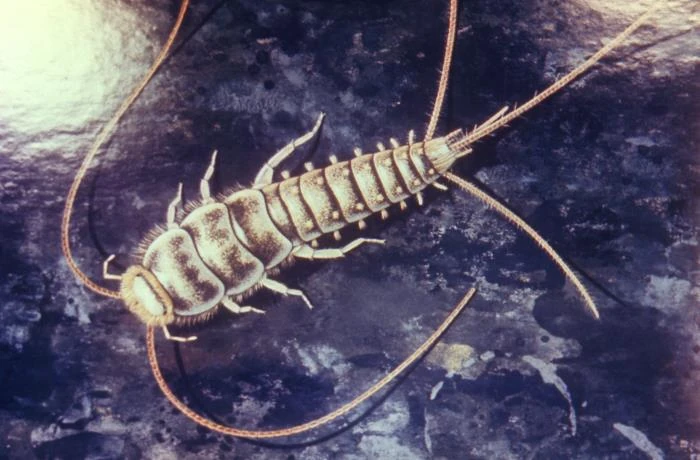
Silverfish are among the insects discussed in collection-care guidance, but seeing one silverfish does not establish that an entire room or library is infested. Identify the insect, look for fresh evidence, and map where it was found. If damage appears active, isolate the affected volume in a way that does not trap moisture or spread debris, then contact a conservator or pest manager. Avoid opening suspect material in a public area.
Respond without spraying the collection
Pesticides can affect people, collection materials, and building surfaces. A spray may kill an insect that is visible while leaving the route, food source, or nesting site unchanged. It may also contaminate books or make future treatment harder. Do not apply household insecticide to a book, shelf, or archive room. Any use of a pesticide in a collection should be directed by qualified professionals and coordinated with preservation staff.
A response may instead involve correcting a leak, improving cleaning, sealing an entry point, adjusting storage, or arranging targeted treatment of a building location. The choice depends on the pest, evidence, building, and collection. For sensitive material, consult a conservator before freezing, heating, bagging, or moving books; these approaches are not interchangeable and can damage materials if used incorrectly.
Keep a useful record
An IPM log can include the date, location, insect identification if confirmed, trap number, environmental observations, evidence of damage, and action taken. Keep photographs and maps with the record. A log makes it easier to see whether an intervention reduced activity and whether the same issue returns seasonally. It also helps future staff understand why a trap was placed or a repair was made.
Use neutral language. Write “one small insect found on trap 12 beside the north wall” rather than “major silverfish infestation” unless a qualified assessment supports that conclusion. Record uncertainty plainly. Reliable records reduce unnecessary treatment and help specialists evaluate the evidence without relying on memory or broad labels.
Coordinate people and building care
IPM depends on routine responsibilities. Staff who receive deliveries, clean rooms, manage food, repair plumbing, and move collections may all see different parts of the problem. A short reporting process helps observations reach the person responsible for follow-up. Keep traps labelled and locations stable enough for comparison, but review placement if renovation, furniture moves, or building work changes insect routes.
For a small personal library, the same principles scale down: keep food away, address dampness, inspect boxes before bringing them into storage, and investigate repeated signs. Do not panic over a single insect, and do not ignore fresh damage. The objective is a calm, documented response that protects both people and books.
Prevention is the treatment plan’s first step
Integrated pest management brings together clean conditions, building knowledge, monitoring, and careful response. It does not promise a pest-free building, and it does not reduce collection care to traps. NEDCC’s guidance is useful because it frames pest concerns as a continuing management task rather than an isolated spraying event.
When you find an insect, record where and when it appeared, look for supporting evidence, and ask for identification before choosing a response. When you find fresh damage, protect the item and seek qualified help. A well-kept log and a dry, clean environment are often more valuable than an immediate chemical action.
Sources
References below support the factual explanations in this article. Read each source within its stated scope and context.