
Binding Structures · FIELD NOTE 01
Anatomy of a Case Binding
What holds a cloth-covered hardback together?
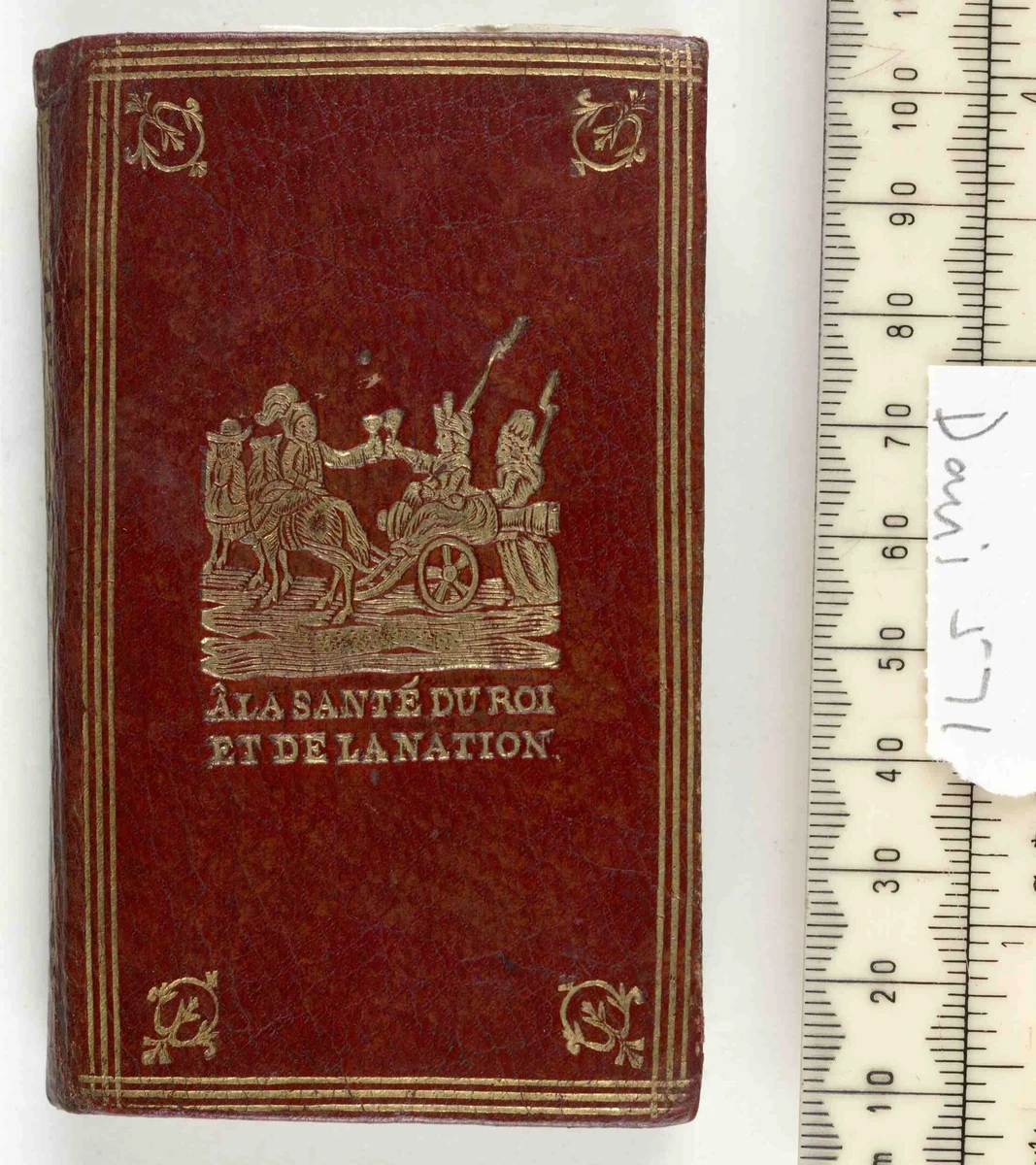
A hardback can look solid while depending on several thin, flexible connections. Its boards protect the pages, but the boards themselves do not bind those pages together. To understand a case binding, separate three questions: what keeps the leaves in sequence, what forms the cover, and what connects the two. That distinction explains why a book can have intact sewing and a loose cover, or a handsome cover surrounding a failing text block.
A cover prepared separately
In an adhesive-case binding, the case is attached to the book block with adhesive. The Language of Bindings distinguishes this attachment from other ways a separately prepared cover can be connected. The familiar commercial hardback is therefore one member of a broader structural family. A rigid cover and an adhesive-bound text are different observations; neither alone establishes how the whole book was assembled. Start with the attachment rather than guessing from the binding's outward appearance. [1]
Picture a closed volume as two assemblies meeting at the joints. The text block contains the leaves and whatever sewing or adhesive holds them together. The case includes the sides, their covering, and the spine area. A simple teaching diagram can show these as separate shapes joined by narrow bridges. It is a map of relationships, not an instruction to separate an actual book. Hidden layers may make a particular volume more complicated than the diagram.
Locate the parts without dismantling them
Identify the front board, back board, head, tail, and fore-edge while the volume is closed. The fore-edge lies opposite the spine. Notice the small cover projections around the page edges, often called squares. Their presence can help describe the fit of the cover, but their size is not a universal measure of quality. A protective projection on one format may catch or deform during shelving on another, so describe what the particular object actually has.
Now open the front board only as far as it moves comfortably, with support beneath it. The pastedown is the sheet attached to the inside of the board; the free endleaf turns separately. Their transition near the joint deserves attention because it is where readers repeatedly ask the cover and text to move relative to one another. A printed map or patterned sheet may attract the eye, while a split at its inner edge carries more immediate information about use.
The gap at the spine can be intentional
A visible space between the case spine and the back of the text block is not automatically a broken attachment. Different constructions produce different opening actions. Do not insert a tool into that gap or add glue merely because the space looks empty. Ask whether the book's joints remain connected and whether the pages move together naturally. A picture of the opening, taken without increasing its angle, is more useful than a forced demonstration of what separates.
The history also resists a simple handmade-versus-machine distinction. Nicholas Pickwoad's study traces adhesive case structures before their industrial predominance. Consequently, the word case does not, by itself, date a volume or prove that every part was machine made. For a catalogue description, separate a visible structural observation from an attribution to a workshop or period. The second needs bibliographical or historical evidence beyond a modern-looking cover arrangement. [2]
Read damage by its location
Consider two hypothetical books. In the first, pages remain firmly grouped but a front board hangs away from them. In the second, the boards stay attached while individual leaves slip out. Both might be advertised as having a broken spine, yet they present different problems. The first directs attention to board attachment; the second requires examination of leaf attachment. This comparison does not diagnose either book. It explains why a vague damage label is a poor basis for choosing a repair.
A third situation is less dramatic: the text block sits unevenly inside the case, or the front endleaf has a crease near its attachment. Record where the misalignment occurs and whether there are loose fragments. Avoid repeatedly closing and reopening the book to see if the problem improves. A condition note can distinguish an existing irregularity from a change noticed during handling without claiming to know when or why the irregularity first developed.
A useful description leads to a usable decision
For a family collection, a short record might identify a cloth-covered case, two firm boards, a split front endleaf, and pages that remain together. Add whether ordinary reading is possible on support. This language gives a conservator or librarian something concrete to evaluate. It also helps the owner decide whether a digital copy can meet the immediate reading need while the physical book waits for assessment. An access decision need not begin with an adhesive purchase.
Understanding a case binding means following connections, not memorizing an inventory of attractive surfaces. The most useful questions are where the cover bends, where it attaches, and whether the leaves remain secure. A loose case, a detached leaf, and an intentional hollow should not receive the same response. Once those differences are visible, protecting the book becomes a matter of supporting its particular construction rather than making every hardback behave like a new one.
Sources
References below support the factual explanations in this article. Read each source within its stated scope and context.